|
Key Insights
|
Details
|
|
Forecast Period
|
2027-2031
|
|
Market Size (2025)
|
USD 128.37 Million
|
|
CAGR (2026-2031)
|
17.26%
|
|
Fastest Growing Segment
|
Livestream Shopping
|
|
Largest Market
|
West
|
|
Market Size (2031)
|
USD 333.71 Million
|
Market Overview
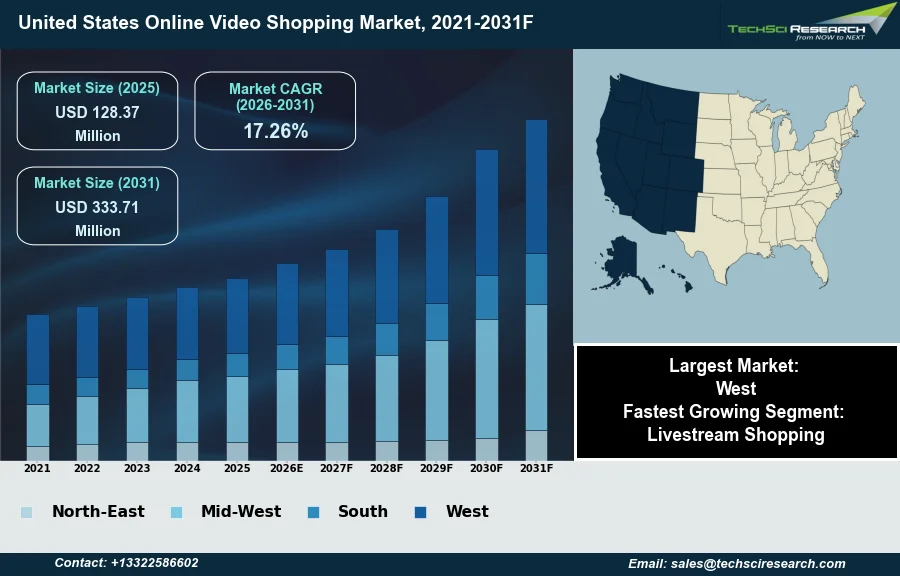
The United States Online Video Shopping Market will grow from USD 128.37 Million in 2025 to USD 333.71 Million by 2031 at a 17.26% CAGR. Online video shopping, often referred to as live commerce, represents an interactive e-commerce methodology where products are presented and sold through live-streamed video content, facilitating real-time consumer interaction and direct purchasing. This market's expansion is primarily supported by increasing consumer preference for engaging visual product demonstrations, the inherent convenience of remote purchasing, and the widespread integration of shopping functionalities within social media platforms. These factors collectively foster enhanced customer engagement and efficient transaction processes.
Supporting this growth, according to the Interactive Advertising Bureau, digital video ad revenue in the United States reached $78 billion in 2025, signifying a 25.4% year-over-year increase, while social media advertising revenue totaled $117.7 billion in 2025, demonstrating a 32.6% growth, driven partly by deeper commerce integration. However, a notable challenge impeding market expansion is navigating the evolving regulatory complexities related to advertising transparency, consumer data privacy, and product authenticity within live video environments.
Key Market Drivers
Influencer Engagement Fuels U.S. Video Shopping Growth
Increased social media and influencer engagement serves as a potent catalyst for the United States online video shopping market. Influencers leverage their authentic connections with followers to drive product discovery and sales through engaging video content. This dynamic fosters a trustworthy environment where consumers are more inclined to explore and purchase items showcased by personalities they trust. According to LongYield, in February 2026, US influencer marketing spend alone crossed $10 billion in 2025, up 144% in three years, underscoring the significant investment brands are making in this channel to reach consumers. This demonstrates the direct impact of social platforms and influencers in guiding consumer purchasing decisions within the video commerce landscape.
Interactive Live Shopping Enhances Engagement and Conversions
Concurrently, the growing consumer preference for interactive shopping experiences significantly propels the market forward. Consumers are increasingly seeking more dynamic and personalized ways to evaluate products, moving beyond static images and descriptions. Live video shopping provides this desired interactivity through real-time Q&A sessions, instant product demonstrations, and direct engagement with sellers, creating an immersive retail environment. According to a Shopify report from February 2026, the average mobile ecommerce conversion rate reached 2.41%, surpassing desktop, with live shopping noted for its ability to help create communities and drive conversions. This shift towards engaging visual and participatory shopping models drives higher engagement and conversion rates, making video a critical sales channel. According to NRF 2026 insights, as of January 2026, the projected U.S. live shopping market is expected to reach $68 billion by 2026.
Download Free Sample Report
Key Market Challenges
Regulatory Complexities Impeding Growth in US Online Video Shopping
Navigating evolving regulatory complexities presents a significant impediment to the growth of the United States online video shopping market. These challenges encompass advertising transparency, consumer data privacy, and product authenticity within live video environments. Businesses face increased scrutiny and the potential for substantial penalties if compliance standards are not met. The necessity of adhering to a complex and dynamic regulatory landscape diverts resources that could otherwise be allocated to innovation and market expansion within this interactive e-commerce segment.
Authenticity, Advertising Claims, and Data Privacy in Live Video
Specifically, ensuring product authenticity and truthful advertising in live video is critical. According to the Direct Selling Self-Regulatory Council's 2025 Activity Report, approximately 94% of claims reviewed originated from social media and video-sharing platforms, indicating prevalent issues with product and business opportunity claims in these video-centric channels. This highlights the considerable regulatory burden on companies to monitor and ensure compliance in real-time. Additionally, intensifying consumer data privacy regulations necessitate robust data protection frameworks, impacting how businesses collect and ethically utilize customer information for personalized experiences, further restricting the operational flexibility and transactional efficiency crucial for sustained market expansion.
Key Market Trends
Dominance of short-form shoppable videos in U.S. online video shopping
The United States online video shopping market is significantly shaped by the dominance of short-form shoppable video content. These concise, engaging videos, prevalent across social media platforms, offer an efficient medium for product demonstrations and immediate consumer interaction. Their brevity aligns with evolving consumer content consumption habits, facilitating quick product discovery. Platforms actively promote and integrate shopping functionalities within these video formats, enhancing their market presence. According to Adobe, November 10, 2025, in "U.S. Online Spending Hits $88.7B in Oct 2025, Up 8.2% YoY," the share of online revenue attributed to advertising on social media platforms rose by 28% year-over-year in October, reflecting the growing effectiveness of video-centric social commerce.
AI-driven personalization and consumer demand in video shopping
Another critical trend is the advanced personalization of video shopping experiences through artificial intelligence. AI algorithms analyze extensive consumer data, including browsing patterns and purchase history, to deliver highly relevant product recommendations and tailor video content for individual viewers. This bespoke approach extends to dynamically adjusting offers during live streams, thereby creating a more engaging and efficient purchasing journey. The expectation for such tailored experiences is high among consumers. According to the Adobe 2025 AI and Digital Trends for Retail report, 69% of consumers want retailers to anticipate their needs with relevant offers or information at the right moment, indicating a strong consumer demand for customized interactions that AI facilitates within video shopping environments.
Segmental Insights
Livestream Shopping: Fastest-Growing Segment in US Online Video Shopping
The key segmental insight for the United States Online Video Shopping Market reveals Livestream Shopping as the fastest-growing segment. This rapid expansion is primarily driven by evolving consumer preferences for highly interactive and authentic digital retail experiences. Consumers are increasingly drawn to the real-time engagement offered by livestream events, where hosts provide immediate product demonstrations and answer questions, fostering a stronger sense of connection and trust than traditional e-commerce. Furthermore, the significant influence of content creators and social media integration plays a pivotal role, leveraging established communities to drive product discovery and purchasing decisions. This blend of entertainment, direct interaction, and social proof makes livestream shopping a compelling and effective format for modern buyers.
Regional Insights
The West Dominates US Online Video Shopping, Powered by Innovation, Infrastructure, and Strategic Logistics.
The West consistently leads the United States Online Video Shopping Market, primarily driven by its robust ecosystem of technological innovation and advanced e-commerce infrastructure. This region, particularly California, serves as a hub for digital commerce development, with companies actively investing in web development and mobile-first strategies to enhance consumer experiences. The presence of numerous technology startups and a culture of early adoption among its population foster rapid integration of new shopping modalities, including live commerce. Furthermore, strategic logistical advantages, exemplified by major distribution hubs like Los Angeles, significantly contribute to efficient product delivery, which is a critical factor for online retail success. These combined factors solidify the West's dominant position.
Recent Developments
-
In October 2025, Amazon.com Inc. launched a new artificial intelligence-powered tool named "Help Me Decide" for its users in the United States. This innovation was designed to assist shoppers who felt overwhelmed by numerous product options in the online shopping environment. The tool automatically appeared on product detail pages after a customer viewed several similar items, offering a single, personalized product recommendation based on their shopping history. This new product launch represented Amazon's continued investment in leveraging AI to enhance and streamline the digital shopping experience, including future implications for video-based product discovery.
-
In April 2025, QVC Group announced a significant collaboration with TikTok, aiming to expand its presence in the United States online video shopping market. This partnership enabled QVC to deliver continuous live shopping content directly through TikTok's platform. Users gained access to round-the-clock live-streamed shopping experiences, featuring QVC's diverse product range and expert presenters. This strategic alliance leveraged QVC's established expertise in live video production and interactive retail, while simultaneously integrating with TikTok's expanding role in social commerce, thereby enhancing consumer engagement and facilitating direct purchases through video content.
-
In October 2024, Dolby.io showcased significant advancements in streaming technology, directly benefiting the United States online video shopping market. These technological breakthroughs included features such as sub-half-second latency, multi-view options, and improved scalability for live commerce applications. The developments aimed to deliver a highly interactive and seamless shopping experience for consumers by minimizing delays and enabling multiple product viewing angles during live streams. Such research and development in streaming infrastructure provide essential support for brands and retailers to offer high-quality, engaging video content, thereby enhancing the effectiveness and growth of online video shopping initiatives.
-
In 2024, Walmart completed the acquisition of Vizio, a strategic move intended to bolster its streaming advertising capabilities within the United States market. This collaboration aimed to integrate Walmart's extensive customer data with video platforms, which is crucial for the expanding online video shopping ecosystem. The acquisition positioned Walmart to offer advertisers enhanced tools for planning comprehensive campaigns across various streaming channels, directly linking advertising exposure to retail purchases. This initiative underscored Walmart's commitment to advancing its digital commerce strategy by leveraging advanced streaming technology and consumer insights to drive sales through video advertising.
Key Market Players
- Amazon.com Inc.
- TikTok (ByteDance Ltd.)
- Shopify Inc.
- Meta Platforms Inc.
- Google LLC
- Alibaba Group Holding Limited
- Walmart Inc.
- YouTube (Google LLC)
- Flipkart Internet Private Limited
- JD.com Inc.
|
By Type
|
By Product Type
|
By Payment Mode
|
By Region
|
- Shoppable Videos
- Livestream Shopping
|
- Apparel & Accessories
- Health & Personal Care
- Consumer Electronics
- Others
|
- Online Payment
- Cash on Delivery
|
- Northeast
- Midwest
- South
- West
|
Report Scope:
In this report, the United States Online Video Shopping Market has been segmented into the following categories, in addition to the industry trends which have also been detailed below:
-
United States Online Video Shopping Market, By Type:
-
Shoppable Videos
-
Livestream Shopping
-
United States Online Video Shopping Market, By Product Type:
-
Apparel & Accessories
-
Health & Personal Care
-
Consumer Electronics
-
Others
-
United States Online Video Shopping Market, By Payment Mode:
-
Online Payment
-
Cash on Delivery
-
United States Online Video Shopping Market, By Region:
-
Northeast
-
Midwest
-
South
-
West
Competitive Landscape
Company Profiles: Detailed analysis of the major companies present in the United States Online Video Shopping Market.
Available Customizations:
United States Online Video Shopping Market report with the given market data, TechSci Research offers customizations according to a company's specific needs. The following customization options are available for the report:
Company Information
- Detailed analysis and profiling of additional market players (up to five).
United States Online Video Shopping Market is an upcoming report to be released soon. If you wish an early delivery of this report or want to confirm the date of release, please contact us at sales@techsciresearch.com