|
Key Insights
|
Details
|
|
Forecast Period
|
2027-2031
|
|
Market Size (2025)
|
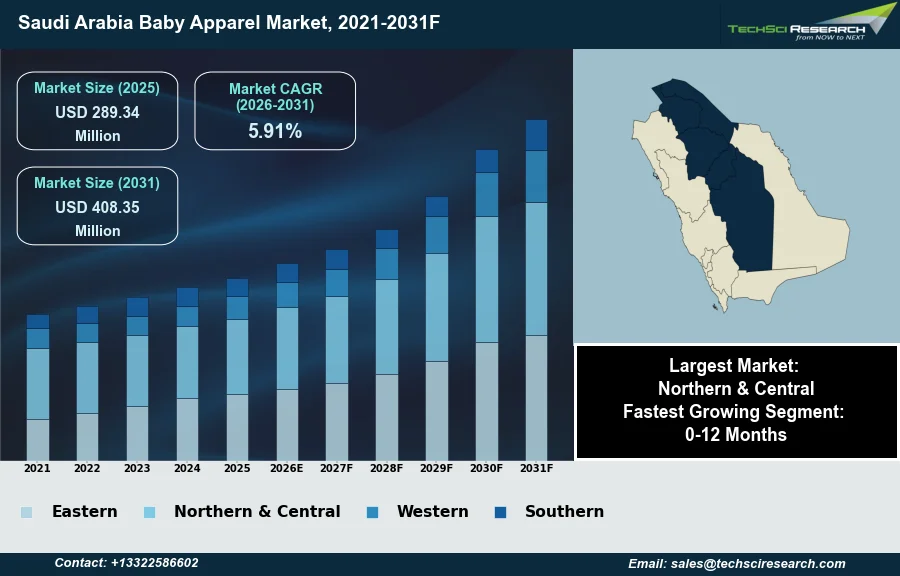
USD 289.34 Million
|
|
CAGR (2026-2031)
|
5.91%
|
|
Fastest Growing Segment
|
0-12 Months
|
|
Largest Market
|
Northern & Central
|
|
Market Size (2031)
|
USD 408.35 Million
|
Market Overview
The Baby Apparel Market in Saudi Arabia will grow from USD 289.34 Million in 2025 to USD 408.35 Million by 2031 at a 5.91% CAGR. Baby apparel encompasses clothing items specifically designed for infants and toddlers, typically from newborn up to 36 months of age, including bodysuits, sleepwear, outerwear, and accessories. The market's expansion in Saudi Arabia is primarily driven by a robust birth rate, sustained consumer purchasing power supported by a strong economy, and the cultural emphasis placed on children's welfare. Additionally, ongoing urbanization and evolving lifestyle preferences contribute to demand for diverse and quality baby clothing.
However, a significant challenge impeding market growth is the intense price competition prevalent among both domestic and international brands. According to the UN World Population Prospects 2024, Saudi Arabia recorded approximately 560,224 live births in 2024. This demographic factor underpins market demand, yet competitive pricing pressures frequently lead to constrained profit margins across the retail segment.
Key Market Drivers
Rising Incomes and Affluence Drive Premium Babywear Demand
The Saudi Arabia Baby Apparel Market is significantly influenced by the rising disposable incomes and the expanding affluent consumer base within the Kingdom. This economic uplift enables families to increasingly prioritize premium, branded babywear, moving beyond basic necessities to seek products that reflect evolving preferences for quality, comfort, and safety. This trend is further supported by the substantial growth in overall consumer spending, indicating a robust purchasing power. According to Knight Frank, in November 2025, retail spending in Saudi Arabia reached SAR 1.41 trillion in 2024, growing 7% year-on-year. This upward trajectory in consumer expenditure directly fuels demand for higher-value baby apparel, as parents are more willing to invest in sophisticated designs, organic materials, and renowned international brands for their children.
Digital Transformation and E-commerce Expand Access to Baby Apparel
Another pivotal driver is the continuous expansion of e-commerce and the broader retail infrastructure across Saudi Arabia. The Kingdom's digital transformation initiatives and increasing internet penetration are reshaping consumer purchasing habits, making online platforms a primary channel for baby apparel acquisition. This shift provides consumers with wider access to diverse product ranges, including specialized organic and sustainable babywear, which are gaining popularity. This move towards digital transactions is evident as electronic payments accounted for 79% of total retail payments in Saudi Arabia in 2024, an increase from 70% in 2023, according to the Saudi Central Bank, as reported by Saudi Gazette in April 2025. This robust digital payment adoption, coupled with physical retail infrastructure development, enhances market accessibility and convenience for parents. Furthermore, the broader apparel and clothing sector in Saudi Arabia experienced significant growth, with spending increasing by 30% to SR1.6 billion in a week in January 2026, according to Argaam, as reported in January 2026.
Download Free Sample Report
Key Market Challenges
Price competition erodes margins and constrains investments in baby apparel.
The Saudi Arabia baby apparel market faces a significant impediment to growth due to intense price competition. This prevalent competition, originating from both numerous domestic and international brands, forces market participants to maintain aggressive pricing strategies. Such an environment directly compresses profit margins for retailers and manufacturers operating within the baby apparel segment. This constrained profitability subsequently limits companies' capacity for crucial investments in areas such as product innovation, quality enhancements, and targeted marketing campaigns specifically designed for infants and toddlers.
Intense rivalry deters new entrants and expansion in a price-driven fast fashion market.
This intense rivalry also discourages the entry of new specialized players and hinders the expansion plans of existing ones, as the potential returns are often diminished by pricing pressures. According to Saudi Fashion Commission reports, the fast fashion market in Saudi Arabia, a segment characterized by its price sensitivity and rapid trend cycles which directly influences the broader apparel sector, is projected to reach approximately USD 3.3 billion in 2026. This substantial value within a highly competitive area indicates the pervasive nature of price-driven consumer behavior across the apparel landscape, including baby clothing, making it challenging for brands to achieve sustainable growth and premium positioning without facing significant margin erosion.
Key Market Trends
Rising Demand for Eco-Friendly Baby Apparel
A significant trend impacting the Saudi Arabia Baby Apparel Market is the increasing consumer preference for sustainable and eco-friendly clothing. Parents are becoming more conscious of environmental issues and the health implications of production processes, leading them to seek babywear made from organic materials and free from harmful chemicals. This growing awareness fosters demand for brands that prioritize transparency and environmental responsibility in their supply chains. According to AMC Insights, March 2025, 45% of shoppers in Saudi Arabia prefer brands with eco-friendly practices. This sentiment extends to baby apparel, with parents willing to invest in products that align with their values for a healthier child and planet.
Shift Toward Modest, Culturally Attuned Baby Wear
Another prominent trend shaping the Saudi baby apparel landscape is a distinct shift towards modest and culturally appropriate designs. While global fashion influences exist, a strong emphasis persists on clothing that respects local traditions and cultural norms, even for infants. This translates into demand for baby garments offering appropriate coverage and design elements reflecting the Kingdom's heritage, moving beyond purely Western aesthetics. This trend is particularly evident in local retail offerings and domestic brands catering to discerning parents. According to Saudi Arabia Fashion Trends 2026, May 2026, Google Trends data indicated a substantial surge in search interest in February 2026, with "abaya modest" reaching a normalized value of 54.
Segmental Insights
Key Growth Drivers for the 0–12 Months Segment
The 0-12 Months segment is identified as the fastest-growing within the Saudi Arabia Baby Apparel Market. This rapid growth is primarily attributed to the unique developmental stage of newborns and infants, which necessitates a higher frequency of clothing purchases due to their swift physical growth and the constant need for wardrobe replenishment. Augmented disposable incomes among Saudi families, supported by economic diversification initiatives, empower parents to invest in higher quality, comfortable, and specialized apparel for their infants. Additionally, a pronounced cultural emphasis on children's presentation, alongside increasing exposure to global fashion trends, significantly drives demand for stylish and premium infant wear during this crucial early development phase.
Regional Insights
Regional Dominance Driven by Urban Hubs, Higher Incomes, and Strong Retail Network
The Northern and Central region stands as the dominant force within the Saudi Arabia Baby Apparel Market. This leadership is primarily attributed to the substantial concentration of Saudi Arabia's population in major urban centers like Riyadh, which serves as the Kingdom's principal commercial and administrative hub. The region benefits from higher average household incomes, enabling consumers to make premium purchasing decisions for baby apparel. Furthermore, an extensive and well-developed retail infrastructure, including numerous international brand outlets and modern shopping destinations, offers a wide array of baby apparel selections, catering to diverse consumer preferences. The demographic profile, characterized by young families and a significant expatriate community, consistently drives robust demand for quality infant clothing in this key area.
Recent Developments
-
In June 2025, Popees Baby Care, a recognized baby fashion brand, articulated its intention for international expansion, targeting the Gulf region with plans for Saudi Arabia, Bahrain, and Qatar. While specific store openings were initially scheduled for Dubai, the company's broader strategy highlighted its commitment to extending its presence into other GCC countries, including Saudi Arabia. This strategic announcement indicated a growing interest from international baby apparel brands in the Saudi market, potentially leading to new product introductions and increased competition.
-
In January 2025, several Saudi kidswear brands introduced AI-powered virtual try-on tools designed specifically for modest styles. This innovative technology was developed to enhance the online shopping journey for parents by allowing them to visualize clothing on children virtually, thereby improving purchasing confidence and reducing the rate of online returns. This breakthrough in digital retail directly impacted the accessibility and consumer experience within the Saudi Arabia Baby Apparel Market, catering to local cultural preferences.
-
In June 2024, FirstCry, a prominent multi-channel baby products retailer, revealed its expansion strategy for the Middle East, including a significant focus on Saudi Arabia. The company announced plans to establish 12 new modern stores and additional warehouses in key Saudi cities such as Riyadh, Jeddah, and Dammam. This initiative aimed to bolster the availability and distribution of baby apparel and related products across the Kingdom, providing Saudi families with enhanced access to a wider range of options and improving logistics within the Saudi Arabia Baby Apparel Market.
-
In February 2024, Mithaq Capital SPC, an investment firm with links to a prominent Saudi Arabian family, completed the acquisition of a controlling 54 percent stake in The Children's Place. This significant corporate development for a major children's apparel retailer, which includes an extensive line of baby clothing, represented a strategic collaboration and ownership shift. The acquisition by a Saudi-linked entity was poised to influence the brand's future operations, product offerings, and market approach within the Saudi Arabia Baby Apparel Market.
Key Market Players
- Mothercare KSA
- Alshaya Baby
- Next KSA Baby
- H&M KSA Baby
- Zara Kids KSA
- Gap Kids KSA
- Carters KSA
- OshKosh KSA
- Baby Shop KSA
- Al Hokair Baby
|
By Product Type
|
By Age Group
|
By Sales Channel
|
By Region
|
|
|
- 0-12 Months
- 12-24 Months
- 2-3 Years
|
- Online
- Specialty Stores
- Supermarkets/Hypermarkets
- Others
|
- Eastern
- Northern & Central
- Western
- Southern
|
Report Scope:
In this report, the Saudi Arabia Baby Apparel Market has been segmented into the following categories, in addition to the industry trends which have also been detailed below:
-
Saudi Arabia Baby Apparel Market, By Product Type:
-
Saudi Arabia Baby Apparel Market, By Age Group:
-
0-12 Months
-
12-24 Months
-
2-3 Years
-
Saudi Arabia Baby Apparel Market, By Sales Channel:
-
Online
-
Specialty Stores
-
Supermarkets/Hypermarkets
-
Others
-
Saudi Arabia Baby Apparel Market, By Region:
-
Eastern
-
Northern & Central
-
Western
-
Southern
Competitive Landscape
Company Profiles: Detailed analysis of the major companies present in the Saudi Arabia Baby Apparel Market.
Available Customizations:
Saudi Arabia Baby Apparel Market report with the given market data, TechSci Research offers customizations according to a company's specific needs. The following customization options are available for the report:
Company Information
- Detailed analysis and profiling of additional market players (up to five).
Saudi Arabia Baby Apparel Market is an upcoming report to be released soon. If you wish an early delivery of this report or want to confirm the date of release, please contact us at sales@techsciresearch.com