|
Forecast Period
|
2026-2030
|
|
Market Size (2024)
|
USD 112.45 Million
|
|
CAGR (2025-2030)
|
15.35%
|
|
Fastest Growing Segment
|
Non-Exclusive E-Commerce Platform
|
|
Largest Market
|
North
|
|
Market Size (2030)
|
USD 264.07 Million
|
Market Overview
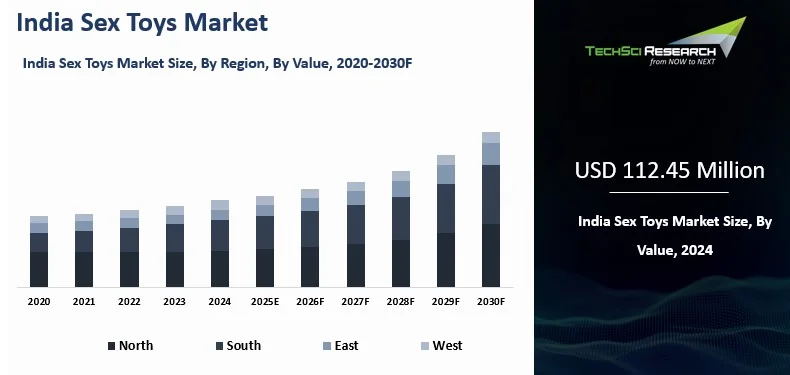
Sex Toys Market in India was valued at USD 112.45 million in 2024 and is projected to reach USD 264.07 million by 2030, registering a CAGR of 15.35% over the forecast period. The market is expanding steadily, supported by growing awareness of sexual wellness, shifting social attitudes (especially in urban areas), rising disposable incomes, and improved access through e-commerce. Young consumers and city-based buyers are increasingly open to trying these products, which is translating into higher demand. Discreet online storefronts, the entry of international brands, and innovation in product design and features are also shaping purchasing behavior. However, cultural taboos, social stigma, and perceived legal/regulatory uncertainty continue to act as key constraints.
To address these barriers, market participants are prioritizing consumer education, privacy-first buying experiences, and discreet packaging and delivery. With gradual normalization of sexual wellness conversations and wider availability across digital and select retail channels, the market is expected to maintain strong growth momentum through the forecast period.
Download Free Sample Report
Key Market Drivers
Increasing
awareness of sexual wellness and sexual health
Increasing
awareness of sexual wellness and sexual health is the foundational driver of
India's sex toy market as consumers begin to view pleasure and intimate care as
legitimate parts of overall well-being rather than topics to avoid. This shift
is supported by online resources, discreet direct-to-consumer models, and a
growing willingness to seek guidance on intimate health, which has helped
expand the customer base beyond niche audiences to mainstream consumers in
urban and aspirational markets.
Awareness is strongest among digitally active
consumers who can access information anonymously and make informed choices
without fear of judgment, which reduces stigma and encourages trial. The
category is also benefiting from broader acceptance of sexual health as a
preventive and quality-of-life issue, which creates space for products that
support intimacy, comfort, and self-care. For brands, this means education and
trust-building are as important as product features, since consumers are more
likely to engage when they feel safe and informed. For Instance, nearly 70 percent of Indians feel uncomfortable discussing sexual
concerns even with healthcare professionals, underscoring how privacy and
discreet access are critical for engagement in this category.
Changing
societal attitudes toward sex and pleasure products
Changing
societal attitudes toward sex and pleasure products have reduced stigma in
India and created a more favorable environment for the sex toy market,
particularly in urban areas where cultural openness is advancing faster than in
rural regions. Traditional taboos are eroding as consumers increasingly accept
sexual pleasure as a legitimate part of life and are more willing to discuss,
purchase, and use intimacy products without shame. This cultural shift is
encouraging brands to invest more in India, expand product portfolios, and
develop messaging that aligns with evolving social norms rather than relying on
secrecy or purely adult-oriented positioning.
Attitudes are changing most
visibly among younger populations, who are more connected to global trends and
more comfortable treating intimate wellness as a normal aspect of self-care. As
acceptance grows, the category is gradually moving from a hidden market toward
a more openly discussed segment within personal wellness. For Instance, the sexual wellness market in Gujarat grew 22
percent annually, with sales rising from ₹33 crore in FY2024 to ₹41 crore in
FY2025, reflecting how reduced stigma is translating into measurable demand
growth.
Growth of
e-commerce and online retail
Growth of
e-commerce and online retail has been a critical enabler for India's sex toy
market by providing privacy, convenience, ease of access, and discreet delivery
that physical retail often cannot match. Online platforms allow consumers to
browse anonymously, compare products, and order from home, which directly
addresses the privacy concerns that have historically deterred many buyers from
purchasing adult products. This channel has also democratized access beyond
metros, allowing consumers in tier 2 and tier 3 cities to purchase products
that were previously difficult to obtain due to limited physical store
availability.
The rise of quick-commerce is further accelerating adoption
because it offers ultra-fast, discreet delivery that suits impulse-driven
purchases and late-night demand. As digital penetration expands and delivery
networks improve, online channels are likely to remain the primary growth
engine for the category. For Instance, sales of sexual
wellness products on quick-commerce platforms like Swiggy Instamart, Blinkit,
and Zepto grew 35 to 40 percent between January and November 2025, while
general trade grew around 22 percent.
Millennials
and Gen Z openness
Millennials and
Gen Z openness to sexual wellness products is a major demographic driver of the
India sex toy market because these younger generations are more educated about
sexual health, more exposed to global trends through digital media, and more willing
to prioritize intimate wellness compared to older cohorts. Their comfort with
online purchasing, reduced stigma around pleasure products, and willingness to
experiment make them the core consumer base for sex toys in India, fueling
sustained demand growth. Younger consumers also tend to value privacy,
transparency, and credible information, which pushes brands to focus on
education, safety, and wellness-oriented positioning rather than purely adult
messaging.
This demographic shift is already visible in faster adoption in
urban centers and growing penetration in tier 2 markets as awareness spreads
through social media and culturally sensitive communication. As this cohort
becomes more dominant in purchasing power, the market is likely to benefit from
deeper engagement and higher repeat rates. For Instance, consumers are increasingly treating sexual health as a legitimate part of
overall well-being and that repeat engagement is rising once the fear of being
judged is removed, which is especially true for younger, digitally-native
users.
Influencer
marketing and social media visibility
Influencer
marketing and social media visibility have become powerful tools for
normalizing the sex toy category in India by helping consumers discover trusted
information, product reviews, and personal stories that reduce hesitation and
build confidence before purchase. Educators, content creators, and wellness
advocates are using various platforms to share educational content that
destigmatizes sexual wellness, which creates social proof and encourages trial
among younger, digitally-native consumers.
This visibility is especially
important in a market where stigma still exists, because influencer-led content
can frame intimate products as part of self-care and wellness rather than taboo
adult items. As trust grows, consumers become more willing to explore different
product types and try new brands, which supports broader category adoption. For
brands, influencer partnerships also help convey safety, quality, and cultural
relevance in a way that traditional advertising often cannot in this sensitive
category. For Instance, consumers are increasingly
seeking credible information and lifestyle-led approaches over exaggerated
promises, which shows how education-driven content is shaping category
perception and purchase behavior.
Female-led
demand and women-focused products
Female-led
demand and women-focused products are emerging as a transformative growth
pillar for India's sex toy market as women increasingly prioritize their own
pleasure and sexual health. This shift is driving demand for products
specifically designed for female anatomy and needs, including vibrators,
clitoral stimulators, lubricants, and intimate care items that are marketed
through wellness-focused messaging rather than purely adult positioning. Brands
are responding by developing women-centric portfolios that feel more culturally
relevant and approachable, which helps broaden the market beyond traditional
male-dominated segments and encourages broader adoption among female consumers.
As women become more comfortable seeking products that support their intimate
well-being, the category is expanding into more diverse usage occasions and
longer-term repeat behaviors. This trend is also pushing brands to invest in
education, safety, and design that aligns with female preferences and comfort
levels. For Instance, MyMuse, Happy
Birds IMBesharam, and Happybeing Wellocare as key players, showing how
women-focused domestic brands are shaping category growth with culturally
attuned products.
Local brand
development and India-specific positioning
Local brand
development and India-specific positioning are making the sex toy category more
accessible and culturally relevant to Indian consumers by tailoring product
design, messaging, pricing, and distribution to align with local sensibilities.
Domestic brands such as MyMuse, Happy Birds, Happybeing Wellocare, Kaamastra,
and others are using Indian imagery, language, and storytelling that resonate
better with local audiences, helping overcome cultural barriers that often
limit adoption of international brands.
This localized approach allows brands
to position products as wellness and self-care solutions rather than purely
adult items, which supports broader acceptance and reduces hesitation among
first-time buyers. As these brands expand their reach and invest in education
and trust-building, they are accelerating mainstream adoption across both urban
and emerging markets. The growing presence of homegrown players also signals
that the category is maturing beyond its early niche phase.
Key Market Challenges
Legal
and Regulatory Uncertainties
India's legal stance on sex toys remains ambiguous, posing a significant challenge to market growth. While the sale of sex toys is not explicitly illegal, specific provisions under the Indian Penal Code (IPC) Section 292 classify the sale and distribution of "obscene" materials as punishable offenses. This lack of clear regulations creates an uncertain business environment, discouraging both local and international companies from investing in the Indian market.
Customs regulations further complicate the situation, as imported sex toys are often subjected to scrutiny and can be seized under vague moral and obscenity laws. Many businesses resort to categorizing products under the "health and wellness" or "personal massager" segment to avoid legal complications.
Payment
and Logistical Barriers
Another major challenge facing the India sex toys market is the difficulty in making secure transactions and ensuring discreet delivery. Due to the stigma associated with purchasing sex toys, many consumers prefer cash on delivery (COD) as a payment method. However, logistics providers and e-commerce platforms often limit COD options for sex toys due to the sensitive nature of the products.
Additionally, many banks and payment gateways have restrictions on processing transactions related to adult products, leading to frequent payment failures. Some consumers also fear that sex toy purchases will appear on their credit or debit card statements, making them reluctant to use online payment methods.
From a logistics standpoint, ensuring discreet packaging and delivery is critical. Many consumers worry that their purchases will be exposed during transit or upon delivery. While some e-commerce platforms have implemented neutral packaging strategies, not all logistics providers prioritize discretion, leading to consumer anxiety.
Key Market Trends
Rising
Acceptance of Sexual Wellness
A significant trend in the Indian sex toys market is the growing acceptance of sexual wellness as an essential aspect of overall well-being. Traditionally, discussions about sexual health were considered taboo; however, increased awareness, media exposure, and changing mindsets have led to a shift in perceptions, with nearly 30 million people accessing sexual health information online in 2023.
Global sexual wellness movements, easier access to information, and open discussions on social media platforms have encouraged consumers particularly younger generations to explore products that enhance pleasure and intimacy. Millennials and Gen Z are notably more receptive to viewing sexual health as a part of self-care, which has contributed to a rising demand for sex toys.
Additionally, the emergence of sex education platforms, influencer endorsements, and expert-backed content has helped dismantle societal stigmas. For instance, sexual wellness influencer Seema Anand saw her Instagram follower count grow to over 1.4 million, while other influencers like Dr. Tanushree Pandey Padgaonkar and Pallavi Barnwal also experienced significant growth in their follower counts. Many sex toy brands now collaborate with health professionals and offer detailed guidance on their products to promote safe and responsible use, positioning them as tools for sexual well-being rather than just sources of entertainment..
Emergence
of Local Brands Catering to Indian Consumers
As the Indian sex toys market continues to expand,
several homegrown brands and startups are emerging to cater to the unique
preferences and cultural sensitivities of Indian consumers. While international
brands still dominate a significant share of the market, domestic companies are
carving out their niche by offering affordable, user-friendly, and culturally
adaptable products. These local brands are addressing the challenges of stigma
and accessibility by focusing on discreet packaging, subtle marketing, and
consumer education.
A major focus for Indian brands is affordable pricing,
making sex toys accessible to a wider audience, particularly in a
price-sensitive market like India. By offering cost-effective alternatives
without compromising on quality and safety, these brands are attracting
first-time buyers who may be hesitant to invest in expensive international
products. This affordability factor is key to expanding market reach beyond
metropolitan cities to smaller towns and semi-urban areas.
Segmental Insights
Product
Type Insights
Adult vibrators dominated the India sex toys market due
to their wide availability, diverse product range, and increasing consumer
acceptance. They are favored for their discreet design, ease of use, and
ability to enhance sexual wellness. Online platforms have made vibrators more
accessible, with discreet packaging and secure payment options addressing
privacy concerns. Innovations such as waterproof, rechargeable, and
app-controlled vibrators have further boosted demand. Additionally, growing
awareness about sexual health and self-pleasure, particularly among women, has
fueled market growth. As stigma decreases and awareness rises, the adult
vibrator segment continues to lead the Indian sex toys market.

Download Free Sample Report
Regional Insights
The North region has become a key demand hub in India’s sexual wellness products segment, supported by rapid urbanization, rising disposable incomes, and greater exposure to digital platforms. Large urban centers such as Delhi, Chandigarh, and Jaipur are witnessing steady growth in online searches and purchases of intimate products. As lifestyle patterns shift and younger populations gain financial independence, spending on personal wellness items is increasing across metro and tier I cities.
Recent Developments
- In October 2025, Cipla Health entered India’s sexual wellness segment with the launch of Unfold, a new brand positioned around openness, trust, and informed choice in intimate wellbeing. The launch marked a significant development in the market as it brought the credibility of a leading consumer healthcare and pharmaceutical company into a category that has traditionally been dominated by digital-first and discretionary brands. Through a health-focused and destigmatizing approach, Cipla Health’s entry highlighted the growing mainstream acceptance of sexual wellness products in India and reflected increasing participation by established healthcare players in the category.
- In April 2025, Skore, a brand owned by TTK Healthcare, expanded its product portfolio with the introduction of a new range of intimacy and pleasure products, strengthening its presence in India’s evolving sexual wellness market. The launch included products such as Teasher, Vibher, Armour, Tremors, and Waves, priced between ₹700 and ₹5,000 and manufactured using medical-grade silicone. The expansion represented a notable strategic move as Skore diversified beyond condoms and lubricants into a broader ecosystem of technology-enabled intimacy products designed for modern consumers.
- In October 2024, Bold Care launched Bloom, a women-focused wellness brand, as part of its broader expansion strategy beyond men’s sexual health products. The company further strengthened its market position in February 2025 by announcing that it had crossed ₹100 crore in annual recurring revenue (ARR) while recording more than 250% annual growth. During the same period, Bold Care also raised USD 5 million in Series A funding backed by Rainmatter and the founders of CaratLane to support research and development initiatives and expand its digital presence. These developments reflected the growing shift toward gender-inclusive and holistic intimate wellness offerings within India’s sexual wellness industry.
- In 2025, PleasureX India introduced its “New Arrivals 2025” collection through its online platform, featuring advanced intimacy and wellness products tailored for Indian consumers. The collection included next-generation vibrators, AI-enabled personal wellness devices, remote-controlled couple products, suction stimulators, magnetic charging technologies, and eco-friendly lubricants, supported by discreet delivery services across the country. The launch highlighted the increasing adoption of digitally driven retail models and demonstrated how Indian platforms are bringing globally emerging sexual wellness technologies into the domestic market in a privacy-focused and consumer-friendly manner.
Key Market Players
- MyMuse
India Private Limited
- Happy
Birds Inc. (IMBesharam)
- Happybeing
Wellocare India Pvt Ltd.. (Sassiest)
- Kaamastra
- Thirdbase
Wellness Pvt. Ltd.
- Sirona
Hygiene Private Limited (Bleu)
- LT
Digital Private Limited (Lovetreats)
- Manzuri
Wellness Private Limited
- Huha
Care Private Limited (Sassy)
- Sangya
Project Pvt. Ltd.
|
By Product Type
|
By End User
|
By Distribution Channel
|
By Region
|
- Adult Vibrator
- Massager
- Dildo
- Others
|
|
- Exclusive e-Commerce Platforms
- Non-Exclusive E-Commerce Platform
|
|
Report Scope:
In this report, the India Sex Toys Market has been
segmented into the following categories, in addition to the industry trends
which have also been detailed below:
- India Sex Toys Market, By Product
Type:
o Adult Vibrator
o Massager
o Dildo
o Others
- India Sex Toys Market, By
End User:
o Male
o Female
- India Sex Toys Market, By
Distribution Channel:
o Exclusive e-Commerce Platforms
o Non-Exclusive E-Commerce Platform
- India Sex Toys Market, By
Region:
o North
o South
o East
o West
Competitive Landscape
Company Profiles: Detailed analysis of the major companies present
in the India Sex Toys Market.
Available Customizations:
India Sex Toys Market report with the given market
data, TechSci Research offers customizations according to a company's specific
needs. The following customization options are available for the report:
Company Information
- Detailed analysis and
profiling of additional market players (up to five).
India Sex Toys Market is an upcoming report to be
released soon. If you wish an early delivery of this report or want to confirm
the date of release, please contact us at sales@techsciresearch.com