Forecast Period | 2025-2029 |
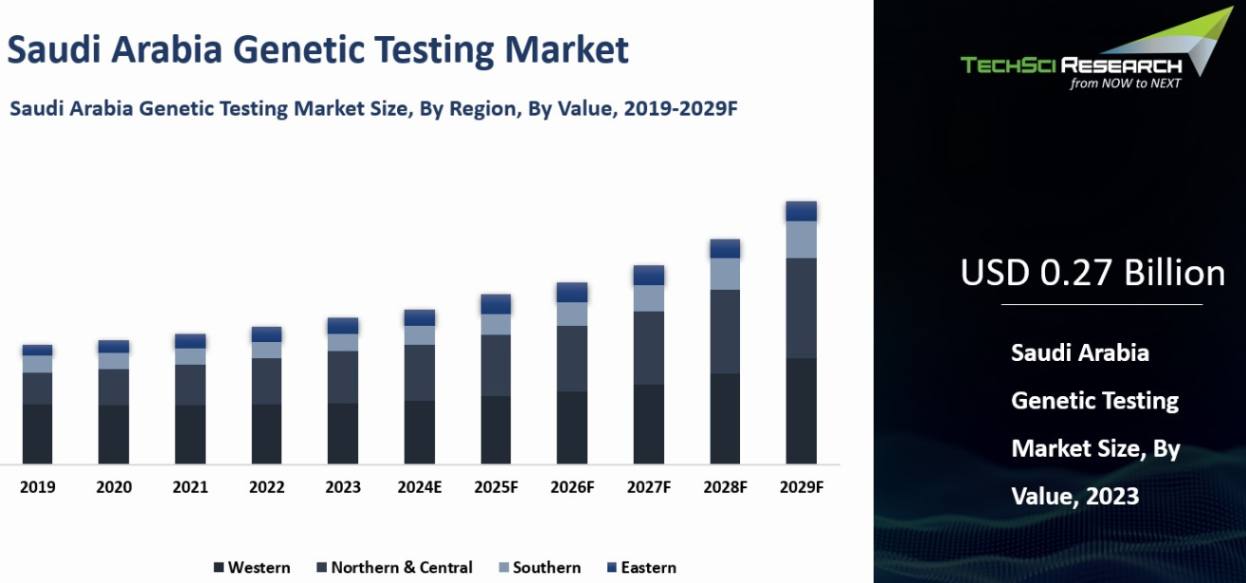
Market Size (2023) | USD 0.27 Billion |
Market Size (2029) | USD 0.47 Billion |
CAGR (2024-2029) | 9.75% |
Fastest Growing Segment | Diagnostic Testing |
Largest Market | Northern & Central |
Market Overview
Saudi Arabia Genetic Testing
Market was valued at USD 0.27 Billion in 2023 and is expected to reach USD 0.47 Billion by 2029 with a CAGR of 9.75%.
Genetic testing is a medical diagnostic process that analyzes an individual's DNA to uncover information about their genetic makeup, inherited traits, disease risks, and other genetic characteristics. It provides valuable insights into a person’s genetic profile and has wide applications in healthcare, research, and personal decision-making. The process involves studying the sequence of nucleotide base pairs in DNA, which contains the body’s biological instructions. Before testing, individuals typically consult genetic counselors who explain the procedure, possible outcomes, and implications, helping them make informed choices. DNA samples are collected through blood, saliva, cheek swabs, or tissue biopsies.
Growing awareness of genetic testing’s role in disease prevention, early detection, and personalized treatment is driving market growth. Public health campaigns and educational initiatives have strengthened the understanding of its benefits among patients and healthcare providers. In parallel, technological advancements such as next-generation sequencing (NGS) and gene-editing techniques have improved testing accuracy, affordability, and efficiency making genetic testing more accessible to a wider population.
Rising cancer prevalence and the growing emphasis on precision medicine are fueling demand for genetic testing in oncology. Identifying cancer susceptibility and tailoring treatment based on individual genetic profiles are now central to modern cancer care. Similarly, pharmacogenomic testing analyzing how genetic variations affect drug response is gaining traction as healthcare moves toward personalization. By enabling optimized medication choices and reducing adverse reactions, pharmacogenomics is reshaping treatment strategies. Collectively, these trends underscore genetic testing’s expanding role in predictive, preventive, and personalized medicine, marking it as a cornerstone of future healthcare innovation.
Download Free Sample Report
Key Market Drivers
Increased Awareness About Genetic Testing
Awareness campaigns and educational initiatives are crucial in helping individuals and families understand their genetic risks, empowering them to make informed choices about healthcare, family planning, and disease prevention. As awareness grows, more people consider genetic testing to assess their likelihood of developing inherited conditions like diabetes, which affects 27.19% of the Saudi population, and take proactive steps to manage potential risks. Recognized as a key tool for preventive healthcare, genetic testing enables early identification of health risks and supports timely interventions.
Couples aware of genetic conditions in their families increasingly opt for preconception or carrier testing, with national data indicating that over 83% of participants consider premarital screening important for protecting future generations. Similarly, informed expectant parents are more likely to choose non-invasive prenatal testing (NIPT) to assess fetal health and screen for chromosomal disorders such as Down syndrome.
In oncology, rising awareness of genetic influences on cancer susceptibility and treatment outcomes has spurred demand for testing. Patients and clinicians now prioritize personalized therapies based on genetic profiles, improving treatment precision and effectiveness. Likewise, growing understanding of genetic variation in drug response is fueling interest in pharmacogenomic testing, helping optimize medication selection and dosage.
Public health campaigns, healthcare provider recommendations, and advocacy from patient organizations play a pivotal role in spreading awareness about the benefits and limitations of genetic testing. Informed patients are better equipped to make healthcare decisions aligned with their goals. Emphasis on the importance of family medical history particularly inherited genetic factors encourages individuals to explore testing for deeper insight into their health risks.
Awareness efforts also target rare diseases, prompting affected families to seek genetic testing for accurate diagnosis and treatment guidance. Advocacy groups and healthcare professionals continue to drive this awareness, fostering a culture of proactive genetic health management in line with Vision 2030. These combined efforts are instrumental in accelerating the growth and development of the Saudi Arabia Genetic Testing Market.
Technological Advancements
Next-Generation Sequencing (NGS) has transformed genetic testing by enabling the simultaneous sequencing of multiple genes or even entire genomes at unprecedented speed and accuracy. This high-throughput technology is central to initiatives like the Saudi Genome Program (SGP), which aims to sequence 100,000 genomes to create a national genetic database. Whole Genome Sequencing (WGS) decodes an individual’s complete genetic makeup, providing extensive data for detecting a wide range of conditions, and Whole Exome Sequencing (WES) offers a more cost-effective alternative by targeting protein-coding regions where most disease-causing mutations occur. To date, the SGP has processed over 63,000 samples and identified 7,500 pathogenic variants.
Advancements in pharmacogenomics further enhance the personalization of medicine. In Saudi Arabia, the King Faisal Specialist Hospital and Research Center (KFSH&RC) has launched the first pharmacogenomic profiling service in the region, initially covering medications such as Metoprolol, Simvastatin, and Warfarin. High-throughput platforms now facilitate large-scale analysis of genetic markers, and DNA microarrays streamline genotyping and gene expression profiling. Similarly, digital PCR enables highly sensitive quantification of genetic mutations and rare variants.
The integration of advanced bioinformatics tools has simplified the processing and interpretation of vast genetic datasets, improving the detection of disease-associated variations. Liquid biopsy technologies, such as circulating tumor DNA (ctDNA) analysis, allow non-invasive monitoring of genetic alterations in cancer. KFSH&RC was the first in the Middle East to adopt this technology, which can detect around 50 cancer-related genes and over 3,000 genetic mutations from a small blood sample.
Technological progress in miniaturized and portable genetic testing devices has made point-of-care testing more accessible, especially in remote regions. Meanwhile, artificial intelligence (AI) and machine learning are being leveraged to uncover patterns in complex genetic data, enhancing disease prediction and therapy selection. Continued innovation and cost reductions are making genetic testing increasingly affordable and widespread. Improved biobanking and sample management technologies also ensure the long-term preservation of genetic material for research and diagnostics. Collectively, these advancements are poised to accelerate the growth of the Saudi Arabia Genetic Testing Market.
Rise in Cancer Diagnostics
Genetic testing plays a vital role in identifying individuals with inherited mutations that increase cancer risk, enabling early detection and personalized monitoring. One study in Saudi Arabia found that 38.4% of a cohort carried pathogenic variants linked to hereditary cancer risk. By analyzing a patient’s tumor genetics, testing also supports precision medicine by tailoring treatment strategies to the specific molecular characteristics of the cancer, a field advanced by initiatives like the Precision Oncology Saudi Summit. Families with hereditary cancer syndromes benefit greatly from such testing, as it identifies carriers who may require closer surveillance or preventive measures.
The growing emphasis on cancer diagnostics has driven demand for genetic counseling, where specialists guide individuals in understanding their cancer risk and test results. Testing for BRCA1 and BRCA2 mutations remains crucial for assessing breast and ovarian cancer susceptibility; one study of high-risk Saudi patients found that 12.9% had deleterious BRCA mutations, though another study indicated that overall testing rates remain low at just 3.7% of breast cancer patients in the Eastern Region. Similarly, Lynch syndrome, linked to higher risks of colorectal and other cancers, can be detected through genetic testing, with one study of young Saudi colorectal cancer patients finding that approximately 1 in 9 were candidates for testing, prompting timely interventions. In pancreatic cancer, identifying hereditary mutations offers valuable insight for risk assessment and family screening.
In lung cancer, genetic testing helps detect actionable mutations like EGFR, which was found in 29% of patients in one Al-Madinah study, to inform the use of targeted therapies and immunotherapies. Many clinical trials in Saudi Arabia now integrate genetic testing to select participants with specific genetic profiles, strengthening its role in precision oncology research.
Advocacy groups, healthcare providers, and awareness campaigns continue to highlight the importance of understanding genetic risk in cancer prevention and treatment. As research advances, new genetic markers and therapeutic targets are being uncovered, expanding the clinical applications of genetic testing. These developments, coupled with growing awareness, research activity, and personalized treatment adoption, are set to accelerate demand for genetic testing within Saudi Arabia’s oncology landscape and further drive the growth of the country’s genetic testing market.
Key Market Challenges
Data Privacy and Security
Genetic information is highly personal and
sensitive. It can reveal not only an individual's health status but also
information about their family members. Protecting the privacy of this data is
crucial. The vast amount of genetic data generated through testing needs secure
storage and management. This includes protecting data from unauthorized access
and ensuring its integrity. Genetic data breaches can lead to identity theft,
insurance discrimination, or other forms of exploitation. The consequences of
data breaches involving genetic information can be severe.
While there may be some
regulatory framework in place, the evolving nature of genetic testing and data
privacy challenges means that clear and comprehensive regulations are
essential. Saudi Arabia may need to further refine its regulatory framework to
address these issues. Patients must provide informed consent for genetic
testing, understanding the implications for data privacy and security. Ensuring
individuals fully comprehend what they are consenting to is a challenge.
Collaborative research efforts and data sharing can be beneficial, but they
also introduce potential privacy and security risks, especially if data is
shared across borders.
Cultural and Religious Factors
Saudi Arabia has a conservative cultural and social
environment, and privacy is highly valued. Sharing personal health information,
especially genetic information, may be viewed with apprehension due to concerns
about privacy and confidentiality. Islamic beliefs influence many aspects of
life in Saudi Arabia, including healthcare decisions. Some individuals and
families may have religious concerns about genetic testing, especially when it
relates to prenatal testing, which can lead to ethical and religious dilemmas.
Family is central in Saudi Arabian culture, and healthcare decisions often
involve the family as a collective unit.
Decisions about genetic testing may
require consensus and may be influenced by family opinions. Concerns about
potential stigma and discrimination may deter individuals from undergoing
genetic testing. There may be a fear of social or familial repercussions if
certain genetic conditions are discovered. Marriage is an important cultural
and religious institution in Saudi Arabia. Genetic testing for hereditary
conditions may be particularly relevant for couples planning to marry. However,
the introduction of mandatory premarital genetic testing has faced mixed
reactions in the past.
Key Market Trends
Increased Demand for Personalized Medicine
Genetic testing is being used to assess an
individual's genetic predisposition to various diseases, including cancer,
cardiovascular conditions, and neurodegenerative disorders. This information
can inform proactive health measures and early intervention. Pharmacogenomic
testing is increasingly employed to determine how an individual's genetic
makeup affects their response to medications. This allows for the selection of
the most effective and safe medications for an individual, reducing the risk of
adverse reactions. Genetic testing of cancerous tumors helps identify specific
genetic mutations driving the cancer. This information is vital for selecting
targeted therapies and predicting treatment outcomes. Genetic testing is used
to diagnose and manage rare and inherited diseases.
In Saudi Arabia, where
certain genetic conditions are more prevalent, this is especially relevant.
Couples and expectant parents are increasingly interested in genetic testing to
assess the risk of passing on genetic disorders to their children, driving
demand for preconception and prenatal genetic testing. Physicians are using
genetic information to create customized treatment plans for patients,
considering their unique genetic profiles. This can lead to more effective and
personalized healthcare. Genetic testing can identify individuals at risk of
developing certain diseases. This allows for preventive measures and early
disease detection, potentially improving health outcomes.
Segmental Insights
Type Insights
In 2023, the Saudi Arabia
Genetic Testing Market largest share was held by Diagnostic Testing segment and
is predicted to continue expanding over the coming years. Diagnostic testing is at
the core of genetic testing, as it is primarily used to detect and diagnose
genetic disorders and diseases. It plays a crucial role in identifying various
medical conditions, including inherited genetic diseases, genetic predispositions,
and genetic variations associated with diseases. Genetic disorders, including
inherited genetic conditions and genetic predispositions to diseases, are
prevalent in populations worldwide, including Saudi Arabia. Diagnostic testing
is essential for early disease detection and management.
Saudi Arabia, like
many countries, has established newborn screening programs that involve
diagnostic genetic testing. These programs aim to identify and diagnose genetic
and metabolic disorders in newborns, allowing for early intervention and
treatment. The high prevalence of newborn screening contributes to the
prominence of the Diagnostic Testing segment. Genetic counselling is often
accompanied by diagnostic testing, helping individuals and families understand
their genetic risks and make informed decisions about their healthcare and
family planning. Diagnostic genetic testing is not only used for diagnosis but
also for monitoring the progress and management of genetic disorders. Regular
testing is important for patients with known genetic conditions to track their
health status and response to treatments.
Technology Insights
In 2023, the Saudi Arabia
Genetic Testing Market largest share was held by Biochemical Testing segment in the forecast
period and is predicted to continue expanding over the coming years. Biochemical testing is a broad category that
encompasses a wide range of genetic tests, including metabolic and enzymatic
assays, hormone tests, and tests for specific biochemical markers associated
with genetic disorders. These tests play a critical role in diagnosing and
monitoring various genetic and metabolic conditions, making them a fundamental
component of genetic testing. Many countries, including Saudi Arabia, have
implemented newborn screening programs that involve biochemical tests. These
programs aim to detect and diagnose genetic and metabolic disorders in newborns,
allowing for early intervention and treatment. The high prevalence of newborn
screening contributes to the prominence of the Biochemical Testing segment.
Biochemical testing is often used to diagnose common genetic disorders like
phenylketonuria (PKU), congenital hypothyroidism, and galactosemia. These
conditions require early detection and management, making biochemical testing
an essential component of genetic healthcare. Biochemical tests are routinely
performed in clinical practice, and they are often the first step in
identifying potential genetic issues. As such, they have a broad application
and are commonly used by healthcare professionals. Many genetic and metabolic
disorders have well-established diagnostic protocols that involve biochemical
testing. Physicians are trained to use these tests as part of their diagnostic
toolkit.

Download Free Sample Report
Regional Insights
The Northern & Central region dominated the
Saudi Arabia Genetic Testing Market in 2023. The Northern and Central regions of Saudi Arabia are home to major
cities like Riyadh, Jeddah, and Dammam, which have well-established healthcare
infrastructure and facilities. These regions typically have more advanced
medical centers, hospitals, and laboratories equipped for genetic testing
services. The Northern and Central regions have higher population densities
compared to other parts of the country.
This results in a larger pool of
potential customers for genetic testing services, as well as a higher
concentration of healthcare professionals and facilities. These regions are
also the economic hubs of the country, with greater economic development and
higher income levels. This makes genetic testing more accessible to individuals
who can afford such services. Major universities, research institutions, and
medical schools are often located in the Northern and Central regions. These
institutions may conduct genetic research and offer genetic testing services,
contributing to the growth of the market.
Recent Developments
- In October 2025, US-based AI pharmacogenomics company PGxAI partnered with Riyadh's Najashi Holding to introduce its AI-powered platform to Saudi Arabia. The joint venture will integrate PGxAI's technology into the local healthcare system to personalize drug selection and reduce adverse reactions.
- King Faisal Specialist Hospital & Research Centre (KFSHRC) signed an agreement in July 2025 with the Rady Children’s Institute for Genomic Medicine (RCIGM) from the United States. The collaboration aims to implement RCIGM's genome-based newborn screening platform, which can detect over 500 treatable genetic diseases early.
- In September 2025, US molecular diagnostics firm Co-Diagnostics, Inc. signed a Memorandum of Understanding (MOU) with a Saudi partner to form a joint venture. This venture will manufacture and distribute Co-Diagnostics' PCR testing platform throughout the Middle East and North Africa.
- ImmunityBio entered into a strategic MOU in May 2025 with the Saudi Ministry of Investment, KFSHRC, and the King Abdullah International Medical Research Center (KAIMRC). This partnership will launch a "Cancer BioShield" platform focused on advanced cell therapy.
- In January 2025, KFSHRC launched precision medicine services within its Family Medicine Clinics. This initiative allows for the creation of targeted preventive and therapeutic plans based on a patient's genetic profile, lifestyle, and family medical history. It gives patients direct access to the latest genetic tests without needing referrals to specialized clinics.
Key
Market Players
- Anwa Medical Labs
- NoorDX
- Scientific Laboratories
Alliance Company Ltd.
- ELAJ Group
- Genetrack Saudi Arabia
- Johnson & Johnson Services, Inc.
- OncoDNA SA
- Baylor Genetics-King Faisal
Specialist Hospital — Saudi Diagnostic Limited
|
By
Type
|
By
Disease
|
By
Technology
|
By
Service Provider
|
By
Region
|
- Carrier
Testing
- Diagnostic
Testing
- New-born
Screening
- Predictive
& Pre-symptomatic Testing
- Prenatal
Testing
- Others
|
- Sickle
Cell Anemia
- Thalassemia
- Huntington's
Disease
- Cancer
- Others
|
- Cytogenetic
Testing
- Biochemical
Testing
- Molecular
Testing
|
- Clinical
& Metabolic Specialists
- Genetic
Counsellors
- Diagnostic
Laboratories
- Hospitals
|
- Eastern
- Western
- Northern
& Central
- Southern
|
Report Scope:
In this report, the Saudi Arabia Genetic Testing
Market has been segmented into the following categories, in addition to the
industry trends which have also been detailed below:
- Saudi Arabia Genetic
Testing Market, By Type:
o Carrier Testing
o Diagnostic Testing
o New-born Screening
o Predictive & Pre-symptomatic Testing
o Prenatal Testing
o Others
- Saudi Arabia Genetic
Testing Market, By Disease:
o Sickle Cell Anemia
o Thalassemia
o Huntington's Disease
o Cancer
o Others
- Saudi Arabia Genetic
Testing Market, By Technology:
o Cytogenetic Testing
o Biochemical Testing
o Molecular Testing
- Saudi Arabia Genetic
Testing Market, By Service
Providers:
o Clinical & Metabolic Specialists
o Genetic Counsellors
o Diagnostic Laboratories
o Hospitals
- Saudi Arabia Genetic Testing Market, By region:
o Eastern
o
Western
o
Northern
& Central
o
Southern
Competitive Landscape
Company Profiles: Detailed analysis of the major companies presents in the Saudi
Arabia Genetic Testing Market.
Available Customizations:
Saudi Arabia Genetic Testing Market report with the given market data,
TechSci Research offers customizations according to a company's specific
needs. The following customization options are available for the report:
Company Information
- Detailed analysis and profiling of additional
market players (up to five).
Saudi Arabia Genetic Testing Market is an upcoming report to be released
soon. If you wish an early delivery of this report or want to confirm the date
of release, please contact us at sales@techsciresearch.com