|
Forecast
Period
|
2026-2030
|
|
Market
Size (2024)
|
USD
655.76 Million
|
|
Market
Size (2030)
|
USD
860.90 Million
|
|
CAGR
(2025-2030)
|
4.60%
|
|
Fastest
Growing Segment
|
Small
Molecules
|
|
Largest
Market
|
West
India
|
Market Overview
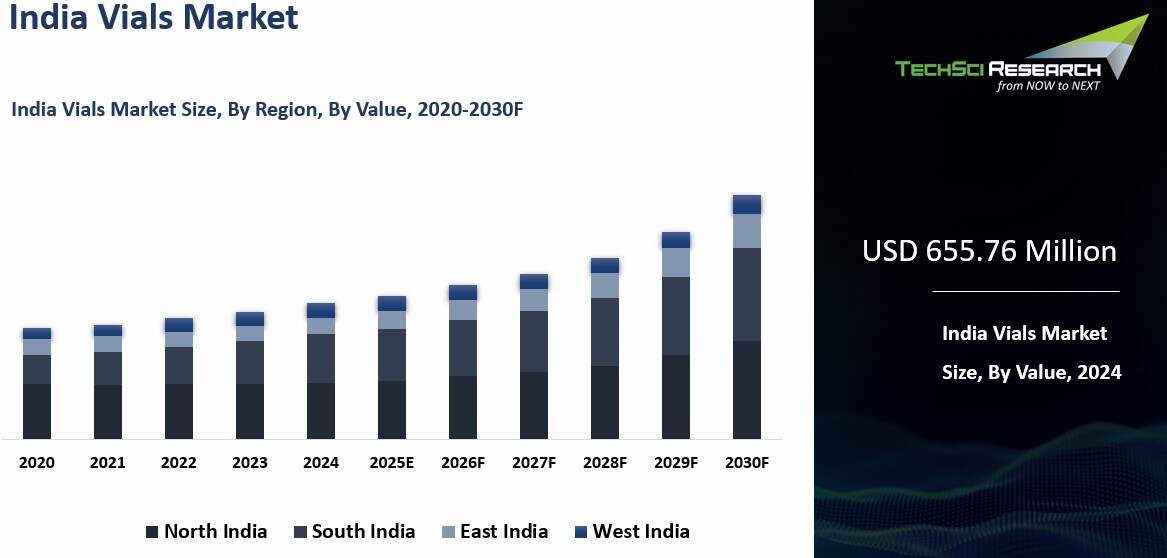
India Vials Market was valued at USD 655.76 Million in 2024 and is expected to grow to USD 860.90 Million by 2030 with a CAGR of 4.60% during the forecast period.
The India vials market plays a critical role in the country’s pharmaceutical
packaging sector, focused on the production and distribution of vials for
storing and administering injectable medications. This market has seen robust
growth, fueled by the increasing demand for injectable therapeutics, the
expanding pharmaceutical industry, and ongoing advancements in packaging
technologies.
Manufacturers are required to comply with stringent regulations,
including the standards outlined by the Central Drugs Standard Control
Organization (CDSCO) and Good Manufacturing Practices (GMP), ensuring the
quality and safety of products. As the demand for injectable drugs rises,
particularly due to the growing prevalence of chronic diseases, and as
innovations in packaging technologies continue to emerge, the market is
positioned for further expansion. To capitalize on this growth, stakeholders
must prioritize strategic investments in production capabilities while
maintaining strict adherence to regulatory frameworks to remain competitive and
ensure compliance.
Key Market Drivers
Expansion of the
Pharmaceutical Industry
The expansion of India’s pharmaceutical industry is a key driver of the Indian vials market, as rising production of injectable drugs, biologics, and vaccines increases the need for reliable packaging solutions. Growing cases of chronic diseases such as cancer, diabetes, and autoimmune disorders have boosted demand for injectable treatments that require vials for safe storage and delivery.
India’s expanding middle class around 41% of the 1.4 billion population along with increasing health insurance coverage has improved access to medicines, further supporting pharmaceutical production. The country is also focusing on strengthening domestic API manufacturing to reduce its current 70% import dependency, mainly from China. At the same time, the rapid growth of biopharmaceuticals, including monoclonal antibodies, gene therapies, and biosimilars, requires specialized vials that meet strict regulatory standards.
India’s strong position in global vaccine production and expanding immunization programs continue to drive large-scale demand for vaccine vials. Additionally, the country’s leadership in generic drug manufacturing and increasing pharmaceutical exports to markets such as the U.S. and Europe require high-quality vials compliant with international regulations. The shift toward patient-centric healthcare, including self-administered injectable therapies and pre-filled vials for single-dose use, is further contributing to the growing demand for specialized vial packaging solutions.
Download Free Sample Report
Surge in Demand for Injectable
Drugs
The surge in demand for injectable drugs is a major factor driving the growth of the Indian vials market, as treatments for chronic diseases, infections, and cancers increasingly rely on injectable therapies that require safe and sterile packaging. The rising burden of conditions such as diabetes affecting about 77 million adults in India with another 25 million prediabetic along with cardiovascular diseases, cancer, and autoimmune disorders has significantly increased the need for injectables like insulin, monoclonal antibodies, and biologics.
India also has around 1.1 million people who inject drugs, with an HIV prevalence of about 10%, highlighting additional healthcare needs. The growing development of biologics, biosimilars, and advanced biopharmaceutical therapies including monoclonal antibodies and gene therapies further strengthens demand for specialized vial packaging that ensures product stability and sterility. India’s strong role in global vaccine production and expanding immunization programs have also accelerated the need for vaccine vials.
In addition, the biopharmaceutical sector, which contributed about USD 39.4 billion to India’s bioeconomy in 2021, continues to expand, increasing the requirement for temperature-sensitive and high-quality vial packaging. The shift toward patient-centric care, including home-based treatment and self-administration through pre-filled injectables, along with supportive government regulations and CDSCO guidelines for high-quality injectable manufacturing, is further boosting the demand for advanced vial packaging solutions in India..
Increase in Vaccination
Programs and Biologics
The increase in vaccination programs and the rapid expansion of biologics are key drivers of the Indian vials market, as vaccines and biologic therapies require reliable injectable packaging. India is one of the world’s largest vaccine producers, supplying vaccines for diseases such as polio, tuberculosis, hepatitis, and COVID-19, which has significantly increased the demand for vials used in storage and distribution.
Government immunization initiatives, including the Universal Immunization Program (UIP), vaccinate around 26 million newborns and 30 million pregnant women annually through over 9 million sessions supported by nearly 27,000 cold-chain points, further boosting vial consumption. India has also administered more than 2.2 billion COVID-19 vaccine doses, highlighting the scale of vaccine demand. At the same time, the growing adoption of biologics such as monoclonal antibodies, gene therapies, recombinant proteins, and advanced vaccines has increased the need for specialized vials that ensure sterility, stability, and temperature control.
India’s strong role as a global vaccine supplier and the rising demand for biologics in areas like oncology and autoimmune diseases are accelerating vial demand for both domestic use and exports. Additionally, innovations such as pre-filled vials and syringes, along with strict regulatory standards from organizations like CDSCO, WHO, and the U.S. FDA, are encouraging the development of high-quality vial packaging, further supporting market growth.
Key Market Challenges
Stringent Regulatory
Compliance and Quality Standards
The
Indian vials market operates in a highly regulated environment, where
manufacturers must comply with rigorous standards and quality controls to
ensure the safety, efficacy, and integrity of pharmaceutical products.
Regulatory bodies such as the Central Drugs Standard Control Organization
(CDSCO) impose strict requirements on packaging materials and processes,
including vials used for injectable drugs, vaccines, and biologics.
Manufacturers
face substantial challenges in meeting both national and international
regulatory standards, which often include stringent testing protocols,
sterilization processes, and packaging materials that can withstand temperature
fluctuations and other environmental factors. Ensuring compliance with these
regulations demands significant investments in quality control, research and
development (R&D), and technology upgrades. For small and medium-sized vial
manufacturers, the cost and complexity of adhering to these standards can be
prohibitive, hindering their ability to scale operations.
Moreover, compliance
with international standards like those set by the U.S. FDA or European
Medicines Agency (EMA) is often necessary for manufacturers targeting global
markets, adding another layer of complexity and cost. As India’s pharmaceutical
exports grow, the pressure to meet these international standards becomes even
more pronounced, limiting the growth potential for some domestic vial
manufacturers. The ongoing need for continuous regulatory updates and
compliance can slow down market agility, presenting a barrier to market
expansion.
Raw Material Shortages and
Price Volatility
The
production of vials, especially glass vials, is highly dependent on the
availability of raw materials such as borosilicate glass, rubber stoppers, and
aluminum seals. India’s vials market is heavily influenced by the fluctuations
in the prices and availability of these critical materials, many of which are
imported. Disruptions in the global supply chain, such as those caused by
geopolitical tensions, trade restrictions, or natural disasters, can lead to
raw material shortages, price hikes, and delays in production.
For
instance, borosilicate glass, which is the preferred material for
pharmaceutical vials due to its resistance to chemical reactions and heat, is
in limited supply and subject to significant price volatility. Similarly, the
rubber and aluminum components that form the closure systems of vials also face
price instability due to global supply chain issues. These fluctuations in raw
material prices impact the overall cost structure of vial manufacturing, making
it difficult for manufacturers to maintain competitive pricing while ensuring
quality. Smaller manufacturers with limited resources may struggle to absorb
these costs, leading to reduced margins or even an inability to meet the
growing demand for vials. In turn, this can restrict the ability of the Indian
vials market to scale effectively, particularly as global demand for vaccines
and biologics increases.
Key Market Trends
Growing Demand for Biologics
and Specialty Drugs
Growing demand for biologics and specialty drugs is emerging as a major growth engine for India’s vials market because complex injectable therapies such as monoclonal antibodies, insulins, biosimilars, and GLP 1 products require highly reliable primary packaging that can preserve sterility, stability, and product integrity throughout storage and administration.
India is strengthening its role in this space through large biopharma players, with Biocon Biologics reporting consolidated FY25 revenue of Rs 9,017 crore and stating that four of its biosimilars each recorded sales of USD 200 million during the year, reflecting the scale at which biologics production is expanding from India for global markets. This rise in biologics output is directly increasing the need for specialized vials made from high quality borosilicate glass, since these products demand tight dimensional precision, low reactivity, and dependable packaging performance across cold chain and injectable use cases.
For instance, SCHOTT Glass India said its Jambusar facility in Gujarat is the company’s second largest pharmaceutical tubing production site globally and that its India operations now cater to all glass primary packaging needs of pharma, from tubing for vials and ampoules to syringes and cartridges, highlighting how packaging suppliers are scaling up in anticipation of stronger demand from biologics and specialty drug manufacturing in India. As biologics, biosimilars, and advanced injectable therapies gain wider acceptance in oncology, diabetes, immunology, and rare disease treatment, the need for high performance vials in India is set to rise in parallel with the country’s expanding biopharmaceutical footprint.
Technological Advancements in
Packaging Solutions
The
increasing sophistication of injectable drug delivery systems is another key
trend that will significantly impact the future of the India vials market.
Advances in vial packaging technology are leading to the development of
smarter, more user-friendly, and more secure vial solutions. These innovations
include pre-filled syringes, auto-injectors, and multi-dose vials that offer
convenience, reduce the risk of contamination, and improve patient compliance.
Additionally,
the growing adoption of anti-counterfeiting technologies in packaging is
reshaping the vials market. Vials are now being equipped with tamper-evident
seals, RFID tags, and other security features to protect against counterfeit
drugs, which are a growing concern globally. The integration of digital
technologies into vials, such as smart sensors that monitor temperature,
humidity, or even the vial’s usage, is gaining traction. These "smart
vials" offer real-time data, ensuring that drugs are stored and
transported within the recommended conditions, which is critical for biologics
and vaccines. As manufacturers strive to meet the needs of the evolving
pharmaceutical industry, the demand for technologically advanced vials will
increase, thereby driving market growth.
Segmental Insights
Application Insights
Based
on the category of Application, the Small Molecules segment emerged as the
dominant in the India Vials Market in 2024. The small molecules segment has
historically been the largest contributor to the India vials market, accounting
for a significant share of the overall demand for vials. Small molecules,
typically made up of low molecular weight compounds, are used in a wide range
of therapeutic areas, including antibiotics, pain management, cardiovascular
diseases, and other chronic conditions. These drugs are primarily delivered via
oral tablets and injectables, with injectable formulations requiring vials for
storage and administration.
India's
pharmaceutical sector, which is one of the largest in the world, is heavily
focused on the production and export of generic small-molecule drugs. The
country is a global leader in the production of affordable generic medications,
which are primarily injectable forms, driving a substantial demand for vials in
the domestic market. The small molecule market also benefits from its
relatively stable growth trajectory, as these drugs remain the standard
treatment option for many diseases. This has led to consistent demand for
vials, with manufacturers scaling production to meet both domestic consumption
and export needs. These factors are expected to drive the growth of this
segment.

Download Free Sample Report
Regional Insights
West
India emerged as the dominant in the India Vials Market in 2024, holding the
largest market share in terms of value. West India, particularly Maharashtra,
Gujarat, and Goa, is the dominant region in the Indian vials market. This
region is a key hub for the country’s pharmaceutical industry, which has a
direct impact on the demand for vials used in drug storage, packaging, and
administration.
West
India is home to many pharmaceutical manufacturers, including both
multinational corporations (MNCs) and domestic companies. Cities like Mumbai
(Maharashtra) and Ahmedabad (Gujarat) are well-established as centers for
pharmaceutical production, including the manufacturing of injectable drugs,
vaccines, and biologics all of which require vials for packaging. The presence
of key pharmaceutical players in these regions drives high demand for vials,
particularly for small molecules, biologics, and vaccines. West India also
plays a pivotal role in India’s pharmaceutical export sector.
The region is
strategically located near major ports, such as Mumbai Port and Mundra Port,
facilitating the export of pharmaceutical products and vials to international
markets. As a result, the demand for vials in the region is not only driven by
domestic consumption but also by the need to cater to global markets. West
India boasts a well-developed infrastructure that supports both pharmaceutical
manufacturing and packaging. The region’s advanced research and development
(R&D) facilities, as well as its focus on technological innovations in
packaging, also contribute to the rising demand for vials with specialized
features, such as pre-filled syringes and multi-dose vials.
Recent Developments
- In February 2026, Glenmark announced that it would launch Sodium Phosphates Injection USP in single-dose vials in April 2026 through its U.S. business, representing another recent vial-format product development from an India-linked company.
- In October 2024, In response to the rising incidents of counterfeit medicines, particularly in the cancer treatment sector, anti-cancer drug vials and strips may soon be mandated to include QR codes and track-and-trace systems. This move aims to enhance the traceability and authenticity of these critical medications, helping to combat the growing threat of fake drugs in the market. The introduction of such technology is expected to bolster the security of drug distribution, ensuring that patients receive legitimate treatments while enabling regulatory bodies to monitor the supply chain more effectively.
- In March 2024, Syngene International, a global contract research, development, and manufacturing organization (CRDMO), announced the operational launch of its newly upgraded biologics facility (Unit 3) in Bangalore, India. The facility was set to support clinical and commercial supply for U.S. and European clients in the latter half of 2024. The facility’s drug substance capacity included two production suites, each equipped with five 2KL single-use bioreactors, totaling a capacity of 20KL. Additionally, the facility featured two high-speed vial filling lines, capable of producing up to one million vials per day, with fill volumes ranging from one to 100mL. Beyond production capacity, the site housed a development suite for the clinical supply of drug substances, which included a 500L single-use bioreactor. Syngene officials stated that further expansion plans were in place, including the addition of two vial filling isolator lines with capacities of 600 vials/minute and 100 vials/minute, respectively, as well as an expansion into perfusion cell culture processing for drug substance production.
Key Market Players
- Amcor
Group
- Corning
Incorporated
- Gerresheimer
AG
- KISHORE
GROUP
- Nipro
Medical India Pvt. Ltd
- SCHOTT
Glass India Pvt. Ltd.
- SGD
Pharma
- MITSUBISHI
GAS CHEMICAL COMPANY, INC
|
By
Preparation
|
By
Application
|
By
Material
|
By
End User
|
By
Region
|
- Ready
to use (RTU)
- Ready
to sterilize (RTS)
|
- Small
molecules
- Biologics
- Diagnostics
|
|
- Hospitals
& clinics
- Pharma
& biotech companies
- Contract
development and manufacturing organizations (CDMOs)
- Diagnostic
laboratories
- Other
|
- North
India
- South
India
- West
India
- East
India
|
Report Scope:
In this report, the India Vials Market has been
segmented into the following categories, in addition to the industry trends
which have also been detailed below:
- India Vials Market, By Preparation:
o Ready to use (RTU)
o Ready to sterilize (RTS)
- India Vials Market, By Application:
o Small molecules
o Biologics
o Diagnostics
- India Vials Market, By Material:
o Glass
o Polymer
o Hybrid
- India Vials Market, By End User:
o Hospitals & clinics
o Pharma & biotech companies
o Contract development and manufacturing
organizations (CDMOs)
o Diagnostic laboratories
o Other
- India Vials Market, By Region:
o North India
o South India
o East India
o West India
Competitive Landscape
Company Profiles: Detailed analysis of the major companies present in the India Vials
Market.
Available Customizations:
India Vials
market report with the given market data, Tech Sci Research offers
customizations according to a company's specific needs. The following
customization options are available for the report:
Company Information
- Detailed analysis and profiling of additional
market players (up to five).
India Vials Market is an upcoming report to be
released soon. If you wish an early delivery of this report or want to confirm
the date of release, please contact us at sales@techsciresearch.com