|
Forecast
Period
|
2025-2029
|
|
Market
Size (2023)
|
USD
146.25 Million
|
|
Market
Size (2029)
|
USD
197.35 Million
|
|
CAGR
(2024-2029)
|
5.08%
|
|
Fastest
Growing Segment
|
Monoclonal
Antibody
|
|
Largest
Market
|
Southern
Vietnam
|
Market Overview
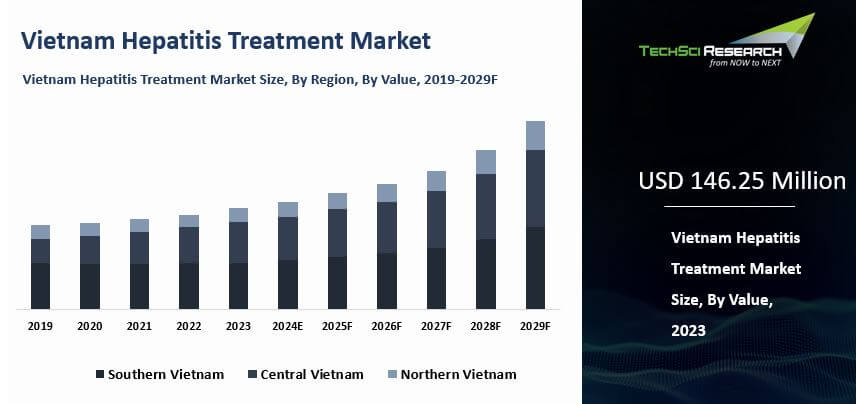
The Vietnam Hepatitis Treatment Market was valued at USD 146.25 million in 2023 and is expected to reach USD 197.35 million by 2029, with a CAGR of 5.08% over the forecast period.
The growth of the Vietnam Hepatitis Treatment Market can be attributed to the increasing demand for functional medications. These medications offer several benefits, including a holistic approach to treatment, individualized treatment plans, reduced reliance on traditional medications, and improved quality of life for patients. Additionally, rising demand for antiviral medications as part of daily health routines is further driving market growth.
Also, demand for additives in antiviral medications is rising, alongside the growing popularity of functional medications and liver-protective drugs such as ursodeoxycholic acid (UDCA), silymarin, glycyrrhizin, and vitamin E. These drugs are increasingly used in the treatment of chronic hepatitis, given the significant impact of the virus on liver health.
The prevalence of hepatitis B in Vietnam, with approximately one in eleven Vietnamese affected, underscores the urgent need for effective treatment and awareness initiatives within the business landscape. Many individuals with hepatitis B are unaware of their condition, highlighting the importance of early detection and treatment. Left untreated, hepatitis B can lead to severe liver damage and increase the risk of liver cancer in a significant proportion of affected individuals. Addressing these challenges presents opportunities for market growth and the development of innovative solutions in the Vietnam Hepatitis Treatment Market during the forecast period.
Download Free Sample Report
Key Market Drivers
Increasing Prevalence of Hepatitis Drives the
Market Growth
Vietnam's high incidence of hepatitis, particularly hepatitis B and hepatitis C, presents a significant market opportunity for hepatitis treatment and related healthcare services. According to the World Health Organization (WHO), an estimated 2.5 million individuals in Vietnam live with chronic hepatitis B, while 500,000 people live with chronic hepatitis C.
The substantial patient population drives demand for hepatitis treatment, leading to an increased need for healthcare services, medications, and other treatment options in the Vietnam Hepatitis Treatment Market. Vietnam is notably prevalent for hepatitis B virus (HBV) and hepatitis C virus (HCV) diseases, with high infection rates among the population.
As the prevalence of hepatitis rises, there is a growing demand for diagnostic testing to identify infected individuals. Diagnostic services such as blood tests, serological assays, and molecular diagnostic techniques are increasingly utilized for accurate diagnosis. This trend drives demand for diagnostic equipment and testing kits, fostering growth in the Vietnam Hepatitis Treatment Market.
The increasing prevalence of hepatitis necessitates proper treatment for affected individuals. Hepatitis treatment comprises antiviral medications, liver-protective drugs, and other supportive therapies. As prevalence continues to rise, more individuals require these treatments, increasing demand for medications and related healthcare services across the business landscape.
Increasing Awareness About Hepatitis Drives the
Market Growth
Increasing awareness plays an important role in driving the growth of the Vietnam Hepatitis Treatment Market. Increased awareness about hepatitis
encourages individuals to seek testing and diagnosis at an earlier stage. Early
detection allows for timely intervention and treatment initiation, leading to
better health outcomes. As awareness grows, more individuals are likely to get
tested for hepatitis, which drives the demand for diagnostic services and
contributes to the treatment market.
Increased awareness of the accessibility and effectiveness of hepatitis treatment options helps people seek appropriate medical care. As people become more aware of the benefits of treatment, they are more likely to actively use it, leading to increased demand for medications, therapies, and healthcare services related to hepatitis treatment and driving growth in the Vietnam Hepatitis Treatment Market. In 2019, 9.4 million individuals were treated for chronic HCV
infection, a more than nine-fold increase from 2015.
Drugs are available to
treat hepatitis B that prevent liver damage and slow the progression of the
disease. Awareness campaigns organized by government bodies, non-governmental
organizations, and healthcare institutions help distribute knowledge about
hepatitis prevention, testing, and treatment. These campaigns often focus on
raising awareness about the risks of hepatitis, modes of transmission, and
available treatment options. By increasing public knowledge, these campaigns
drive the demand for Vietnam Hepatitis Treatment Market.
Improved Healthcare Infrastructure Drives the
Market Growth
Improved healthcare infrastructure plays an important role in driving the growth of the Vietnam Hepatitis Treatment Market. As healthcare infrastructure expands, Vietnam is targeting 35 hospital beds per 10,000 people by 2030, up from 33 beds in 2025. These facilities offer greater reach and convenience for people seeking hepatitis treatment.
Vietnam's health status has improved significantly, with overall basic health indicators bettering other developing countries in the region with similar or higher per capita incomes. With more healthcare facilities available, particularly in the private sector which is encouraged by government policy, the demand for hepatitis treatment services is likely to grow. Improved healthcare infrastructure often includes access to advanced diagnostic technologies and equipment. This enables accurate and effective diagnosis of hepatitis cases, leading to earlier detection and timely treatment, thereby improving the overall quality of care and driving demand.
Improved healthcare infrastructure also implies the development of a trained healthcare workforce. This includes trained doctors, nurses, technicians, and other medical professionals specializing in the diagnosis and treatment of hepatitis. To address shortages, especially in rural areas, the government aims to have 19 doctors and 33 nurses per 10,000 people by 2030. A well-trained healthcare workforce ensures effective management of hepatitis cases, leading to increased demand for treatment services and promoting growth in Vietnam's Hepatitis Treatment Market.
Increasing Medical Tourism Drives the Market Growth
Medical tourism significantly contributes to the growth of the Vietnam Hepatitis Treatment Market. Vietnam has emerged as a sought-after destination for medical tourists seeking hepatitis treatment, primarily due to its provision of high-quality healthcare services. In 2025, the country is projected to welcome 18 million international visitors, many seeking health checkups and treatments. In dentistry alone, clinics in Ho Chi Minh City generate nearly $150 million each year.
Vietnam's investment in modern healthcare facilities, advanced technologies, and skilled medical professionals positions it as an appealing option for individuals seeking hepatitis treatment. The country has four JCI-accredited hospitals, and its healthcare expenditure is expected to reach $20.3 billion in 2025. Moreover, the country offers competitive pricing for medical treatments, including hepatitis treatment, compared to many other nations. For instance, a heart bypass surgery costs between $10,000 and $15,000 in Vietnam, whereas in Thailand it can cost from $25,000 to $30,000. This combination of cost-effectiveness and quality care makes Vietnam a preferred destination for medical tourists seeking hepatitis treatment.
Healthcare providers in Vietnam specialize in hepatitis treatment and management, boasting expertise in the latest advancements in the field. In 2017, the Ministry of Health approved the use of direct-acting antivirals (DAAs) as the primary treatment for Hepatitis C. There are also pilot programs to improve access to hepatitis C diagnosis and treatment, which are set to expand in 2025.
This specialized knowledge enables medical tourists to benefit from tailored treatment plans and comprehensive care. Additionally, medical tourism in Vietnam allows patients to bypass waiting times, ensuring timely access to treatment. One study at a national hospital's outpatient clinic reported an average total waiting time of 104.1 minutes. The accessibility of healthcare services without significant delays is a key driver for medical tourists seeking hepatitis treatment in Vietnam, thereby fostering growth in the Vietnam Hepatitis Treatment Market.
Key Market Challenges
High Treatment Costs
High treatment costs pose a significant barrier to the growth of the
hepatitis treatment market in Vietnam. The expenses associated with hepatitis
treatment, including medication, diagnostic tests, and hospitalization, can be
prohibitively high for many Vietnamese patients, particularly those from
low-income backgrounds. As a result, a large portion of the population may be
unable to afford the necessary treatment, leading to delays in seeking care, incomplete
treatment regimens, or avoidance of treatment altogether. This not only
adversely affects the health outcomes of individuals but also undermines
efforts to control the spread of hepatitis within the population.
Drug Supply Chain Issues
Drug supply chain issues present a significant challenge to the growth
of the hepatitis treatment market in Vietnam. Challenges in the procurement,
distribution, and availability of hepatitis medications can lead to shortages
and interruptions in treatment, impacting patient care and outcomes. These
issues may arise due to logistical constraints, regulatory hurdles, or
disruptions in the global supply chain. As a result, healthcare facilities may
face difficulties obtaining necessary medications in a timely manner, leading to delays in initiating or discontinuing therapy for patients already receiving treatment.
Key Market Trends
Growing Adoption of Antiviral Therapies
The growing adoption of antiviral therapies is poised to significantly drive growth in Vietnam's hepatitis treatment market. Antiviral
therapies, particularly for hepatitis B and C, offer more effective treatment
options compared to traditional approaches, leading to improved patient
outcomes and reduced disease progression. As awareness of these therapies
increases among healthcare providers and the general population, demand for these medications rises. Moreover, advancements in
treatment protocols and the availability of newer, more efficacious antiviral
drugs are further driving adoption rates. This trend is expected to fuel market
growth as more patients seek treatment and healthcare facilities expand their
capacity to provide antiviral therapy services. Additionally, the availability
of generic versions of these medications at more affordable prices is making
treatment more accessible to a broader segment of the population, further
stimulating market demand and growth.
Integration of Telemedicine and Digital Health
Solutions
The integration of telemedicine and digital health solutions is poised
to revolutionize the hepatitis treatment market in Vietnam. These technologies
offer unprecedented opportunities to improve access to care, enhance patient
monitoring, and facilitate remote consultations, especially in rural and
underserved areas where healthcare infrastructure may be limited. By leveraging
telemedicine platforms, healthcare providers can remotely diagnose hepatitis
cases, monitor treatment progress, and provide timely interventions, thereby
overcoming geographical barriers and reducing healthcare disparities.
Additionally, digital health solutions enable better patient engagement through
educational resources, medication adherence support, and lifestyle management
tools, which can lead to improved treatment outcomes and patient satisfaction.
As the adoption of telemedicine and digital health solutions continues to grow
in Vietnam, driven by technological advancements and increasing internet penetration, these innovations are expected to play a pivotal role in expanding access to hepatitis treatment and driving market growth.
Segmental Insights
Drug Class Insights
Based on drug class,The dominance of the monoclonal antibody segment in the Vietnam
hepatitis treatment market in 2023 can be attributed to several key factors.
Monoclonal antibodies have gained prominence for their targeted treatment of hepatitis, particularly hepatitis B and C. These antibodies are designed to specifically target and neutralize
viral antigens, thereby inhibiting viral replication and reducing the viral
load in patients. Compared to traditional treatment modalities such as
interferon therapy, monoclonal antibodies offer several advantages, including
higher efficacy, lower risk of adverse effects, and improved tolerability,
which have contributed to their widespread adoption by healthcare providers and
patients alike.
Additionally, advances in biotechnology and the increasing availability of monoclonal antibody-based therapies have expanded treatment options for patients with hepatitis in Vietnam. Pharmaceutical companies have been
investing in research and development efforts to develop novel monoclonal
antibodies with enhanced potency and improved pharmacokinetic profiles, further
driving market growth. Additionally, government initiatives to improve access to advanced healthcare services and raise awareness of the benefits of monoclonal antibody therapy have played a significant role in
driving the adoption of these treatments. Overall, the dominance of the monoclonal antibody segment reflects the growing preference for targeted and effective therapies in the management of hepatitis in Vietnam.

Download Free Sample Report
Regional Insights
Southern Vietnam's dominance in the hepatitis treatment market in 2023
can be attributed to several key factors. Southern Vietnam,
particularly major cities like Ho Chi Minh City, has a higher population
density and more developed healthcare infrastructure compared to other regions
in the country. This facilitates greater access to healthcare services,
including specialized treatment for hepatitis, and attracts a larger pool of
healthcare professionals with expertise in managing liver diseases. Moreover,
Southern Vietnam serves as a hub for medical tourism, attracting patients from
other regions seeking advanced treatment options, including hepatitis
management. Additionally, the region's stronger economy and higher healthcare spending increase demand for hepatitis treatment and
drive market growth. Furthermore, Southern Vietnam's strategic location and
well-established transportation networks facilitate the efficient distribution
of pharmaceutical products, ensuring timely access to hepatitis medications.
Recent Developments
- In July 2025, ahead of World Hepatitis Day, the World Health Organization (WHO) called for urgent action in Vietnam to address the country’s high liver cancer burden, noting that nearly 90% of cases are caused by untreated hepatitis B and C.
- In May 2025, the VIETNARMS trial delivered major new evidence supporting more effective and affordable Hepatitis C treatment options. The study explored shorter treatment durations and response-guided strategies, demonstrating comparable effectiveness to standard therapies while cutting costs by half. The results supported the use of sofosbuvir/daclatasvir (SOF/DCV), the world’s lowest-cost option, and are expected to inform updated treatment guidelines from both the WHO and Vietnam’s Ministry of Health.
- In May 2025, VIETNARMS also reported several adherence-supporting strategies that remained non-inferior to standard 12-week therapy, including an “induction–maintenance” approach achieving 99.3% SVR12 and a PEG-IFN plus 4-week DAA strategy achieving 94.1% SVR12.
- In January 2025, the HepLINK Vietnam project concluded, demonstrating the cost-effectiveness of a decentralized and integrated model for delivering viral hepatitis services.
- In November 2024, the Ministry of Health announced a major milestone: the first-ever cure of a Hepatitis C patient under Vietnam’s social health insurance program at a primary healthcare facility, achieved through the Strengthening the Integrated Care and Treatment of Hepatitis (StITCH) project in collaboration with HAIVN, local health departments, and Gilead Sciences.
- In November 2024, StITCH was positioned as a national program to strengthen viral hepatitis screening, diagnosis, care, and treatment at the primary care level, while developing and testing a chronic hepatitis model of care aligned with current Vietnamese regulations.
- In November 2024, the StITCH (Strengthening the Integrated Care and Treatment of Hepatitis) project was confirmed to be implemented from early 2024 to 2026 by HAIVN (Beth Israel Deaconess Medical Center–Harvard Medical School), in partnership with the Thái Bình and Phú Thọ health departments and Gilead Sciences.
Key Market Players
- Gilead Sciences Inc
- AbbVie Inc
- Merck & Co Inc.
- F. Hoffmann-La Roche Ltd
- Novartis AG
- Bristol-Myers Squibb Company
- GlaxoSmithKline Plc
- Sanofi
- Pfizer Inc
- Zydus Lifesciences Limited
|
By Disease Type
|
By Drug
Class
|
By Region
|
- Hepatitis A
- Hepatitis B
- Hepatitis C
- Others
|
- Interferon
- Monoclonal
Antibody
- Non-structural
protein 5A (NS5A) Inhibitors
- Nucleotide
Analog Reverse Transcriptase Inhibitors
- Nucleotide
Analog NS5B Polymerase Inhibitors
- Multi Class
Combination
- Others
|
- Southern
Vietnam
- Northern Vietnam
- Central
Vietnam
|
Report Scope:
In this report, the Vietnam Hepatitis Treatment Market has been
segmented into the following categories, in addition to the industry trends
which have also been detailed below:
- Vietnam Hepatitis Treatment Market,
By Disease Type:
o Hepatitis A
o Hepatitis B
o Hepatitis C
o Others
- Vietnam Hepatitis Treatment Market,
By Drug Class:
o Interferon
o Monoclonal Antibody
o Non-structural protein 5A (NS5A) Inhibitors
o Nucleotide Analog Reverse Transcriptase Inhibitors
o Nucleotide Analog NS5B Polymerase Inhibitors
o Multi Class Combination
o Others
- Vietnam Hepatitis Treatment Market,
By Region:
o Northern Vietnam
o Central Vietnam
o Southern Vietnam
Competitive Landscape
Company Profiles: Detailed analysis of the major companies
present in the Vietnam Hepatitis Treatment Market.
Available Customizations:
Vietnam Hepatitis Treatment Market report with the given market
data, TechSci Research offers customizations according to a company's specific
needs. The following customization options are available for the report:
Company Information
- Detailed analysis and
profiling of additional market players (up to five).
Vietnam Hepatitis Treatment Market is an upcoming
report to be released soon. If you wish an early delivery of this report or
want to confirm the date of release, please contact us at sales@techsciresearch.com