Forecast Period | 2026-2030 |
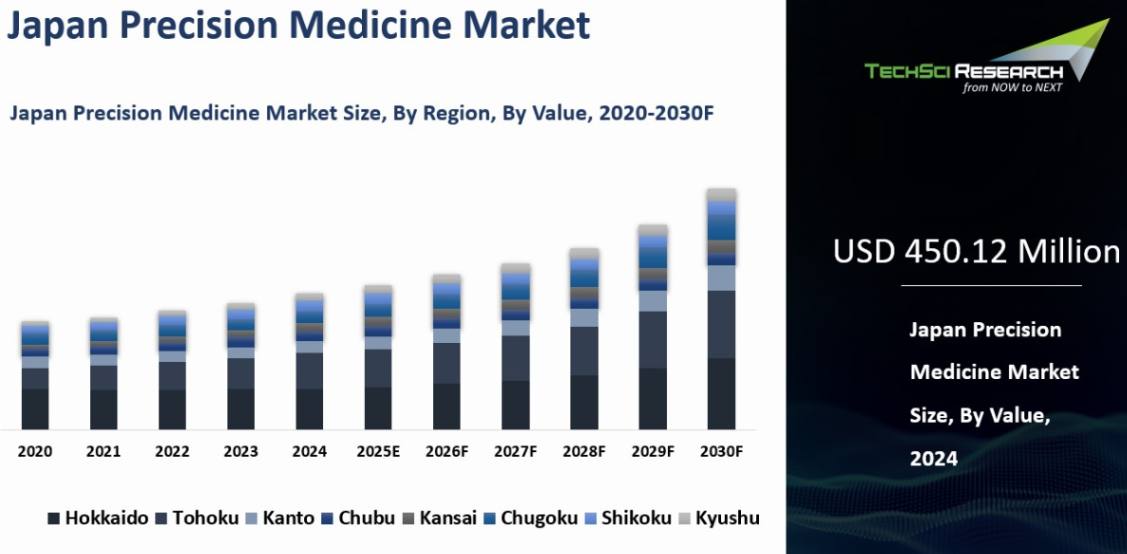
Market Size (2024) | USD 450.12 Million |
Market Size (2030) | USD 821.23 Million |
CAGR (2025-2030) | 10.50% |
Fastest Growing Segment | Therapeutics |
Largest Market | Kanto |
Market Overview
Japan
Precision Medicine Market was valued at USD 450.12 Million in 2024 and is expected to reach USD 821.23 Million with a CAGR of 10.50% through 2030. The Japan Precision Medicine Market is a rapidly evolving sector
within the healthcare industry, distinguished by its emphasis on customizing
medical treatments to individual patient profiles based on genetic, molecular,
and clinical data. This market is shaped by a combination of technological
advancements, shifting healthcare needs, and supportive regulatory frameworks.
The
market has demonstrated robust growth, driven by a surge in the adoption of
personalized healthcare solutions and continuous technological innovations.
Expansion is further supported by the increasing prevalence of chronic
diseases, rising patient demand for tailored treatments, and substantial
investments in research and development.
Despite
facing challenges such as high costs and data privacy concerns, the Japan
Precision Medicine Market remains dynamic and poised for continued growth. The
sector offers significant opportunities for innovation and advancement,
underpinned by ongoing technological progress and a favorable regulatory
environment.
Download Free Sample Report
Key Market Drivers
Advances in Genomic and
Molecular Technologies
Advances in genomic and molecular technologies are accelerating the growth of Japan’s Precision Medicine Market by enabling more personalized, accurate, and efficient disease diagnosis and treatment. These technologies have transformed healthcare delivery through better genomic understanding and individualized therapeutic approaches, supported by national initiatives like the Japan Genomic Medicine Program.
Next-Generation Sequencing (NGS) has become the foundation of precision medicine. It allows rapid and detailed genome analysis, identifying variations that affect disease risk and treatment response. The falling cost of sequencing and its reimbursement under Japan's universal health care system since June 2019 have made genomic testing more accessible. NGS supports large-scale studies and the development of national genetic databases that guide targeted therapy development and personalized treatment plans.
Molecular diagnostics have also evolved, with technologies such as polymerase chain reaction (PCR), microarrays, and digital droplet PCR enabling early and accurate disease detection. These tools identify key biomarkers linked to cancers and genetic disorders, which affected approximately 1,019,000 new patients in Japan in a single recent year. The ability to track disease progression with tools like the AmoyDx Pan Lung Cancer PCR Panel, which became available in 2022, allows clinicians to adjust treatments dynamically, improving patient outcomes.
Bioinformatics has become essential for managing and interpreting complex genomic data. Advanced algorithms, sometimes powered by supercomputers like Fugaku, integrate clinical and genetic information to reveal disease mechanisms, predict risks, and guide therapy selection. Predictive models based on bioinformatics insights enhance diagnosis accuracy and support tailored interventions, reinforcing Japan’s growing adoption of precision care frameworks.
Genetic editing technologies such as CRISPR/Cas9 have expanded therapeutic possibilities by enabling precise modification of disease-causing genes. Recent breakthroughs from institutions like Kumamoto University are advancing research on genetic disorders and paving the way for next-generation therapies targeting specific mutations. CRISPR is also driving investment in personalized treatments designed around individual genetic profiles.
Integration of omics technologies, genomics, proteomics, metabolomics, and transcriptomics provides a complete understanding of biological systems. This holistic view, which is central to developing concepts like "Medical Digital Twins," links genetic variations to cellular and metabolic outcomes, supporting customized therapies. Cross-disciplinary collaborations between bioinformatics, genomics, and clinical science continue to deepen this integration, strengthening Japan’s precision medicine ecosystem and shaping future healthcare delivery.
Increasing Prevalence of
Chronic and Complex Diseases
The rising prevalence of chronic and complex diseases is a key factor driving the growth of Japan’s Precision Medicine Market. As cancer, cardiovascular disease, diabetes, and neurodegenerative disorders become more widespread, the need for personalized and effective treatments continues to grow. Precision medicine tailors therapies to individual genetic, molecular, and clinical profiles, improving treatment accuracy and outcomes while minimizing side effects.
In Japan, where NCDs account for more than four-fifths of all deaths, more than nine out of ten adults aged 75 and older have at least one chronic disease, and of those, approximately eight out of ten live with multiple conditions. These figures highlight the urgency for personalized healthcare solutions. Chronic and complex diseases, which include 16 officially designated groups of pediatric conditions, often require multi-layered treatment approaches due to their biological diversity. Precision medicine supports this need by integrating genetic data with clinical information, enabling personalized drug regimens, targeted therapies, and lifestyle interventions that enhance care effectiveness.
Cancer, a leading cause of death in Japan, remains the largest driver of precision medicine adoption. Precision oncology relies on tumor genomic profiling to identify mutations and select the most effective treatments. This approach enables the customization of chemotherapy and the development of targeted drugs and immunotherapies that improve survival rates while reducing toxicity. The rise in cancer cases in Japan continues to increase the use of genomic testing and biomarker-based therapies, expanding the country’s precision oncology ecosystem.
The burden of chronic diseases also strains Japan's medical insurance and nursing care systems, creating demand for more efficient treatment models, particularly as the elderly population grows. Precision medicine optimizes resource use by reducing trial-and-error prescribing and focusing on therapies with higher success probabilities. Predictive models based on genetic and molecular data help anticipate disease progression and personalize interventions, improving long-term outcomes for conditions like Alzheimer's, which is projected to see continued growth in cases.
Growing demand for precision-based solutions has encouraged greater investment from both public and private sectors. National strategies like Health Japan 21 aim to curb preventable NCDs and their risk factors. Funding from government agencies supports technology innovation, clinical trials, and the commercialization of new therapies. Collaborative efforts between government, research institutions, and pharmaceutical companies are strengthening infrastructure and accelerating the development of precision medicine tools.
Growing Patient Demand for
Personalized Healthcare
Rising patient demand for personalized healthcare is a major driver of Japan’s Precision Medicine Market, signaling a clear move toward individualized treatment that improves care quality and outcomes. Growing public awareness, driven by medical technology advances, government programs like "Japan Vision: Health Care 2035," and easier access to health information, has raised expectations for care that reflects personal genetic, molecular, and lifestyle factors.
More patients are now familiar with genetic testing and its potential benefits through services offered by companies like Genesis Healthcare and GeneLife. This awareness encourages them to seek treatments that match their specific health profiles instead of standardized approaches. The ability to customize therapies according to an individual’s genetic and molecular characteristics increases treatment effectiveness and reduces side effects, reinforcing trust in precision medicine. Patients’ preference for tailored care also supports the growth of digital health platforms that generate personalized treatment recommendations.
Personalized healthcare leads to better disease management, higher treatment success rates, and greater patient satisfaction. Precision therapies reduce adverse reactions and improve safety, prompting more people to favor healthcare options built around their unique biological traits. As more patients experience positive outcomes from personalized care for chronic conditions, demand for such treatments continues to rise, further expanding the reach of precision medicine across Japan’s healthcare system.
Direct-to-consumer (DTC) genetic testing from companies like 23andMe has accelerated this trend. These services allow individuals to access their genetic data and understand potential health risks, with health and wellness predisposition testing becoming a dominant application segment. This accessibility, along with the public introduction of products like the world's first genome-edited tomato in March 2021, has created new patient expectations for healthcare providers to deliver personalized consultation and therapy options.
Clinicians and hospitals are adapting to this shift by integrating precision medicine into regular practice. The Japanese government's 2019 initiative to sequence the whole genomes of up to 93,000 people spurred wider adoption. As healthcare systems build infrastructure to meet growing patient expectations, the demand has outpaced the supply of trained genetic counselors. The result is an evolving patient-centered care model supported by precision-based tools and an expanding precision medicine ecosystem driven by informed, proactive healthcare consumers.
Key Market Challenges
High Costs and Economic
Barriers
One
of the most significant challenges impeding the growth of the Japan Precision
Medicine Market is the high cost associated with precision medicine
technologies and treatments. The development and implementation of personalized
therapies, including advanced genomic sequencing and targeted treatments,
require substantial investment in research and development. Additionally, the
cost of genomic testing, bespoke treatments, and ongoing patient monitoring can
be prohibitively expensive.
The
investment required for the development of new precision medicine technologies
and therapies can be substantial, limiting the ability of smaller firms and
research institutions to participate. Personalized treatments, particularly
those involving advanced biotechnology and targeted drugs, often come with high
price tags, which can be a barrier to widespread adoption. Limited insurance
coverage for precision medicine services can restrict access to these
treatments for patients, affecting market growth.
Data Privacy and Security
Concerns
The
management of sensitive genetic and health data poses significant challenges
related to privacy and security. Precision medicine relies heavily on the
collection and analysis of extensive personal health information, including
genetic data, which raises concerns about data breaches and misuse.
Ensuring
compliance with stringent data protection regulations, such as Japan’s Act on
the Protection of Personal Information (APPI), adds complexity to the handling
and sharing of genetic data. The risk of data breaches and cyberattacks on
health data repositories can undermine patient trust and hinder the adoption of
precision medicine. Managing informed consent and ensuring that patients are
fully aware of how their data will be used and shared is crucial but
challenging in the context of advanced data analytics.
Limited Integration into
Existing Healthcare Systems
Integrating
precision medicine into existing healthcare systems and workflows is another
significant challenge. The implementation of precision medicine requires
changes to clinical practices, infrastructure, and provider training, which can
be complex and resource-intensive.
Healthcare
systems may need substantial modifications to incorporate genomic data and
personalized treatment protocols into routine care, requiring investment in new
technologies and systems. Healthcare providers need specialized training to
understand and apply precision medicine concepts effectively, which can be a
barrier to widespread implementation. Achieving seamless data integration and
interoperability between different healthcare systems and precision medicine
tools is challenging, impacting the efficiency and effectiveness of
personalized care.
Key Market Trends
Integration of Artificial
Intelligence and Machine Learning
The
integration of artificial intelligence (AI) and machine learning (ML) into
precision medicine is a significant driver of market growth. AI and ML
technologies enhance the ability to analyze vast amounts of genomic, clinical,
and healthcare data to identify patterns, predict disease outcomes, and
personalize treatment plans. These technologies enable more accurate and
efficient interpretation of genetic information, leading to the development of
targeted therapies and improved patient outcomes. In Japan, where technological
innovation is highly valued, the adoption of AI and ML in precision medicine is
accelerating, fostering advancements in diagnostics and treatment.
AI
algorithms are increasingly used to analyze complex genetic data and predict
patient responses to various treatments. Machine learning models assist in
identifying novel biomarkers and therapeutic targets. AI-driven tools improve
the efficiency of drug discovery and development processes.
Expansion of Genomic
Sequencing Technologies
The
advancement and expansion of genomic sequencing technologies are crucial for
the growth of precision medicine. High-throughput sequencing techniques, such
as next-generation sequencing (NGS), enable comprehensive analysis of genetic
variations and mutations that drive disease. These technologies are becoming
more accessible and cost-effective, making it feasible to perform large-scale
genomic studies and integrate genomic data into clinical practice. In Japan,
the increased availability and application of genomic sequencing are enhancing
the development of personalized therapies and contributing to the broader
adoption of precision medicine.
The
reduction in sequencing costs has led to wider use of genomic data in clinical
settings. Advances in sequencing technologies support the identification of
rare and complex genetic disorders. Genomic profiling is increasingly used to
tailor cancer treatments and other personalized therapies.
Growth of Precision Oncology
Precision
oncology is a rapidly growing field within precision medicine that focuses on
customizing cancer treatment based on the genetic makeup of tumors. This trend
is driven by the increasing recognition of the need for targeted cancer
therapies that address specific genetic alterations and biomarkers associated
with different cancer types. In Japan, the emphasis on precision oncology is
leading to the development of more effective and personalized cancer
treatments, improving patient outcomes and survival rates.
The
use of genomic profiling to identify actionable mutations and guide targeted
therapy selection. The rise of immunotherapy and personalized cancer vaccines
tailored to individual patients’ genetic profiles. Increased collaboration
between researchers, pharmaceutical companies, and healthcare providers to
advance precision oncology treatments.
Segmental Insights
Application Insights
Based
on the category of Application, the therapeutics segment emerged as the
dominant in the market for Japan Precision Medicine in 2024. Precision medicine
in therapeutics focuses on developing and delivering treatments tailored to the
individual genetic profiles, biomarkers, and disease characteristics of
patients. By leveraging detailed genetic information and advanced diagnostics,
precision therapeutics enables the customization of therapies to achieve better
efficacy and minimize adverse effects. This personalized approach significantly
enhances treatment outcomes, making it a preferred choice in the Japanese
market.
The
rapid advancements in genomic and molecular technologies have propelled the
growth of the therapeutics segment. Techniques such as next-generation
sequencing (NGS), genomics, and proteomics facilitate the identification of
genetic mutations and molecular targets specific to diseases. This
technological progress supports the development of targeted therapies and
biologics, which are central to precision medicine. In Japan, where
cutting-edge technology is widely adopted, these advancements drive the dominance
of the therapeutics segment. Japan has a high prevalence of chronic and complex
diseases, such as cancer, cardiovascular conditions, and neurodegenerative
disorders. The therapeutics segment within precision medicine is particularly
well-suited to address these conditions by offering targeted treatment options
that are tailored to the genetic and molecular profiles of these diseases. The
ability to provide specific and effective treatments for such conditions drives
the growth of this segment in the Japanese market.
Significant
investments in research and development within the therapeutics segment support
the development of innovative treatments and personalized therapies.
Pharmaceutical companies and biotech firms in Japan are investing heavily in
R&D to discover and commercialize new therapeutics that align with
precision medicine principles. This investment fosters innovation and expands
the range of available therapies, reinforcing the dominance of the therapeutics
segment. The Japanese government and regulatory bodies have implemented
policies that support the development and adoption of precision therapeutics.
Initiatives such as expedited approval processes for breakthrough therapies and
incentives for precision medicine research contribute to the growth of the
therapeutics segment. This regulatory support ensures a conducive environment
for the development and introduction of targeted treatments. These factors
collectively contribute to the growth of this segment.

Download Free Sample Report
Regional Insights
Kanto
emerged as the dominant in the Japan Precision Medicine market in 2024, holding
the largest market share in terms of value. The Kanto Region, encompassing
major cities such as Tokyo and Yokohama, is a significant economic and
industrial hub of Japan. This region boasts a high concentration of healthcare
institutions, research facilities, and biotechnology firms, which are crucial
for the development and implementation of precision medicine. The presence of
numerous pharmaceutical companies and medical research institutions in Kanto
accelerates innovation and adoption of precision medicine technologies.
The
Kanto Region is home to some of Japan's leading hospitals and medical centers
that are equipped with cutting-edge technology and offer comprehensive
healthcare services. This advanced healthcare infrastructure supports the
implementation of precision medicine by providing the necessary facilities for
genetic testing, personalized treatment planning, and advanced diagnostics. The
Kanto Region attracts significant investment from both public and private
sectors into research and development within precision medicine. This influx of
funding supports the growth of startups and established companies specializing
in genomics, bioinformatics, and personalized healthcare solutions. The
region’s investment climate fosters an environment conducive to innovation and
commercialization of precision medicine technologies.
The
concentration of universities and research institutions in the Kanto Region
contributes to a robust R&D ecosystem. Collaborations between academic
institutions and industry players drive advancements in precision medicine,
leading to the development of new therapies and diagnostic tools. The region's
emphasis on research ensures a continuous pipeline of innovation in
personalized healthcare. The Kanto Region benefits from favorable regulatory
and policy environments that support the growth of precision medicine. The
Japanese government and regional authorities often provide incentives and
support for initiatives related to personalized healthcare, including
regulatory approvals and funding for research projects. This supportive policy
framework facilitates the introduction and integration of precision medicine
solutions into the healthcare system.
Recent Developments
- In January 2025, Konica Minolta signed an agreement to transfer its precision oncology-related assets to SB TEMPUS. The move aligns with Konica Minolta’s portfolio shift and supports broader commercialization of oncology testing under SB TEMPUS in Japan.
- In January 2025, Advanced Genomics APAC partnered with Cancer Precision Medicine to introduce the GALEAS bladder cancer screening liquid biopsy test in Japan, expanding precision oncology screening options in urology.
- In
July 2024- SoftBank Group Corp. announced the formation of a joint venture, "SB TEMPUS Corp.," in collaboration with Tempus AI, Inc., a leader in artificial intelligence and precision medicine. The joint venture agreement, signed in May 2024, is expected to close in July 2024, pending customary closing conditions. Each party will invest JPY 15.0 billion in the venture. The objective of SB TEMPUS Corp. is to provide precision medicine services in Japan, leveraging AI to advance healthcare. The venture will capitalize on Tempus' expertise and technology developed in the United States.
- In
April 2024, BC Platforms (BCP), a global leader in real-world data, healthcare data management, and analytics, announced an exclusive collaboration with NTT Life Science Corporation, a subsidiary of the NTT Group specializing in the medical field, to accelerate data-driven medicine. Last week, an official opening ceremony was held in Japan for a joint Tokyo facility, located within NTT Life Science, which will spearhead the development of the Japan Precision Medicine PlatformTM (JPP). This event marked the official commencement of the global partnership. The JPP, for the first time in Japan, enables the use of clinical data, ensuring safe and efficient access, sharing, and analysis of data nationwide. JPP is a national medical data distribution platform designed to integrate, curate, and harmonize Japanese healthcare data, powered by BCP’s technology and NTT’s global network and technological expertise.
Key Market Players
- F.
Hoffmann-La Roche Ltd
- Siemens Healthineers AG
- Janssen Pharmaceuticals, Inc
- Illumina, Inc.
- Quest Diagnostics Incorporated
- Myriad Genetics, Inc.
- Medtronic Plc
- Abbott Laboratories Inc.
- QIAGEN NV
- GE HealthCare
|
By
Application
|
By
End User
|
By
Region
|
|
|
- Home
Care
- Hospitals
- Clinical
Laboratories
- Others
|
- Hokkaido
- Tohoku
- Kanto
- Chubu
- Kansai
- Chugoku
- Shikoku
- Kyushu
|
Report Scope:
In this report, the Japan Precision Medicine Market
has been segmented into the following categories, in addition to the industry
trends which have also been detailed below:
- Japan Precision Medicine Market, By Application:
o Diagnostics
o Therapeutics
- Japan Precision Medicine Market, By End User:
o Home Care
o Hospitals
o Clinical Laboratories
o Others
- Japan Precision Medicine Market, By Region:
o Hokkaido
o Tohoku
o Kanto
o Chubu
o Kansai
o Chugoku
o Shikoku
o Kyushu
Competitive Landscape
Company Profiles: Detailed analysis of the major companies present in the Japan
Precision Medicine Market.
Available Customizations:
Japan
Precision Medicine market report with the given market data, TechSci
Research offers customizations according to a company's specific needs. The
following customization options are available for the report:
Company Information
- Detailed analysis and profiling of additional
market players (up to five).
Japan Precision Medicine Market is an upcoming
report to be released soon. If you wish an early delivery of this report or
want to confirm the date of release, please contact us at sales@techsciresearch.com