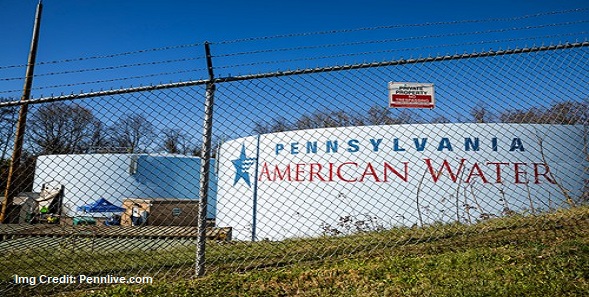
Pennsylvania American Water secures $25.9 million in PENNVEST support
Low-interest funding backs dam
rehabilitation and lead-line replacement as utilities push long-cycle water
system modernization.
United
States: Pennsylvania American Water said it
received $25.872 million in grants and low-interest loans from
the Pennsylvania Infrastructure Investment Authority (PENNVEST) to
support two projects in Lackawanna and Lawrence counties. The package includes
a $16.922 million loan for the Griffin Dam rehabilitation project and
a combination of grant and loan financing to replace approximately 603
identified lead and galvanized lead-impacted service lines in New Castle.
The company said the upgrades will improve dam safety, strengthen water
quality, and help align operations with environmental standards and regulatory
requirements.
"At
Pennsylvania American Water, we strive to provide our customers with
high-quality, reliable water and wastewater services while also meeting
environmental standards and state and federal regulations. We're thankful to
PENNVEST for approving our funding requests and supporting us in that
mission," said Pennsylvania American Water Vice
President of Engineering Tony Nokovich. "These projects will have a
positive impact on the service provided for our customers by enabling us to
continue our efforts to improve water and wastewater infrastructure across the
state."
Further
to this, Governor Josh Shapiro added, "Every
Pennsylvanian has a constitutional right to pure water, and my Administration
is continuing that work by investing in projects that protect public health,
modernize drinking water infrastructure, and support local economies.”
TechSci Research
believes this funding announcement illustrates how the water sector’s
investment cycle is increasingly being driven by a mix of public finance,
regulated utility execution, and health-based compliance priorities. Lead
service-line replacement remains one of the most visible infrastructure themes
in U.S. water markets, while dam safety upgrades point to the growing need for
resilience-related spending beyond pipes and treatment plants alone. Low-cost
financing from state-backed mechanisms can materially improve project viability
and reduce customer-bill pressure, making it an important enabler of broader
system renewal. For market participants, this supports opportunities in
construction, materials, corrosion management, monitoring technology, and
program management. It also reinforces the view that water and wastewater
utilities are entering a more sustained capex era where compliance, public
health, aging assets, and resilience are converging into long-term demand.