GHD Wins Lead Design Role For AlexRenew Nutrient-Reduction Project
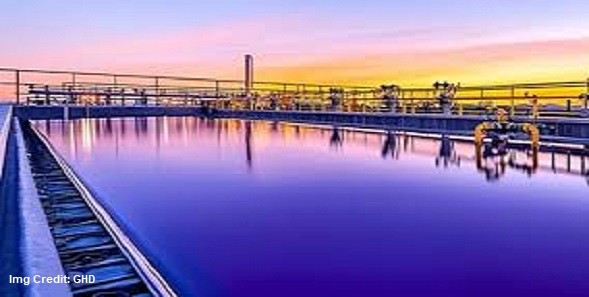
The multiyear wastewater upgrade in
Virginia will expand treatment capacity and strengthen nutrient-removal
performance.
United
States: GHD a global professional services company
said it has been selected as lead designer for AlexRenew’s Nutrient
Reduction Project, a multiyear program to modernize wastewater treatment
infrastructure at the utility’s Water Resource Recovery Facility. Delivered
through a progressive design-build model with Kokosing Industrial as
design-builder, the project will upgrade tertiary settling tanks, convert
existing filters to denitrification filters, support full nitrification in
biological reactor basins, and add 4 million gallons per day of
capacity. The facility is currently permitted for an average daily flow
of 54 million gallons per day, and completion is anticipated in 2032.
The
Nutrient Reduction Project will replace or rehabilitate tertiary settling tanks
and other ageing equipment. The project will also convert existing filters to
denitrification filters and construct up to six additional units. It will also
upgrade the biological reactor basins to support full nitrification.
Additionally, the project will improve nutrient removal performance to meet
state permit limits.
“GHD
is proud to partner with AlexRenew on a project that will strengthen
water quality and support the community for decades to come,” said Chris
Hunter, GHD Americas CEO. “Our team brings
deep expertise in nutrient reduction and complex treatment upgrades,
and we look forward to working collaboratively with Kokosing and AlexRenew to
deliver a resilient, future-ready solution.”
According
to TechSci Research, the AlexRenew project is representative
of a powerful long-cycle trend in wastewater management: capacity
expansion coupled with tighter nutrient-removal compliance. Utilities are no
longer investing only to replace aging assets; they are simultaneously
upgrading treatment performance, resilience, and future growth readiness.
Nutrient-reduction projects are becoming especially important as regulators
tighten discharge expectations and communities demand stronger water-quality
outcomes. For the market, this creates opportunities for engineering firms,
membrane and filter suppliers, biological-treatment specialists, automation
vendors, and construction managers able to work within complex phased-upgrade
environments. The use of a progressive design-build approach also reflects the
industry’s preference for collaborative delivery models on technically
demanding projects. Over time, such projects can stimulate broader investment
in plant optimization, digital monitoring, energy efficiency, and
reuse-readiness across the wastewater value chain.