Coal Usage Rises Across Asia Amid LNG Supply Disruptions
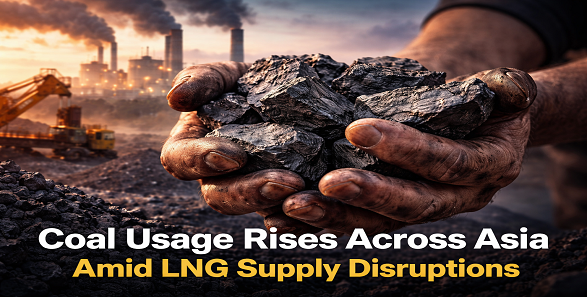
Coal-based power
generation is witnessing a renewed surge across several Asian economies as
countries grapple with tightening liquefied natural gas (LNG) supplies and
rising fuel costs.
The shift has been
largely triggered by ongoing geopolitical tensions in the Middle East, which
have disrupted global energy supply chains and created volatility in LNG
availability. As a result, power utilities in key markets such as India, China,
and Southeast Asia are increasingly turning to coal to ensure uninterrupted
electricity supply, particularly in the face of rising demand.
Industry experts
note that while LNG has been a preferred transition fuel due to its relatively
lower emissions compared to coal, current supply uncertainties and elevated
spot prices have made it less economically viable. Consequently, coal-fired
power plants—many of which were operating at lower utilization levels—are now
being ramped up to bridge the supply gap.
This development
underscores a broader challenge facing the global power sector: balancing
energy security with sustainability goals. While governments continue to invest
heavily in renewable energy capacity, the intermittency of renewables and
limitations in storage infrastructure necessitate reliance on conventional
baseload sources such as coal during periods of supply stress.
The resurgence of
coal also raises concerns regarding emissions and climate commitments,
particularly for countries that have pledged aggressive decarbonization
targets. However, in the short term, ensuring grid stability and meeting peak
electricity demand remain the top priorities for policymakers.
Going forward, the
situation is expected to accelerate investments in energy diversification,
including renewable energy, battery storage, and grid modernization, as
countries seek to reduce dependence on volatile global fuel markets while
maintaining reliable power supply.
TechSci Insights
- The current
shift back to coal is expected to be temporary but structurally
significant, highlighting gaps in global energy transition readiness.
- Countries are
likely to re-evaluate LNG dependency, accelerating long-term
contracts and domestic gas development strategies.
- Increased coal
utilization may delay near-term decarbonization targets, especially
in emerging Asian economies.
- The situation
reinforces the urgency for grid-scale energy storage and flexible
generation technologies to support renewable integration.
- Utilities
may prioritize energy security over cost and sustainability in the short
term, reshaping investment strategies across the power sector.